
Tap a region to read its story
Famous Places in Portugal
Landscapes, cities and the communities around dance
A dance atlas is also a journey through place. These six entries connect famous Portuguese landscapes to local cultural life without claiming that a specific performance is guaranteed there.
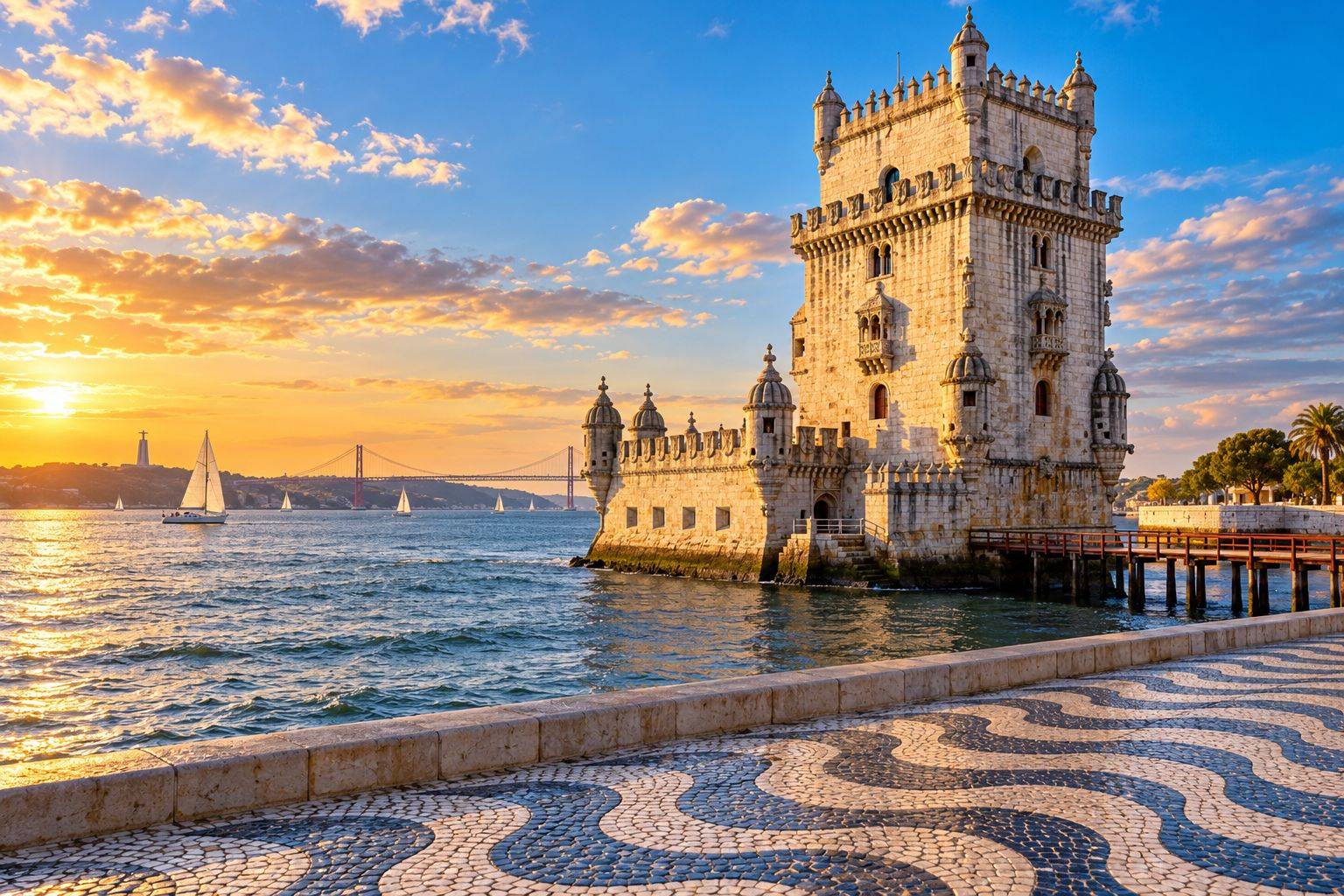
Lisbon · Belém and Alfama
Original editorial illustration · not a historical photograph
Lisbon is much more than a postcard of trams and riverfront monuments. Alfama’s lanes hold the history of urban song; dance education, contemporary studios and theatres give the city a different, present-day rhythm. Visit Belém respectfully and seek publicly advertised dance performances rather than assuming music in a neighborhood is staged for visitors.
Porto · Ribeira
Original editorial illustration · not a historical photograph
Porto’s Ribeira offers layered façades above the Douro River. Its contemporary-dance landscape stretches beyond the historic center to neighboring Matosinhos and Gaia, which jointly host the DDD Festival. Cultural travel can connect walks through the old city with performances in active venues.
Sintra · Pena Palace
Original editorial illustration · not a historical photograph
Sintra’s wooded hills and romantic-era monuments, including Pena Palace, are among Portugal’s best-known landscapes. It is a destination for architecture and cultural history, not an automatic site of a specific traditional dance. DANZO connects such places to the broader country without making invented performance claims.
Douro Valley
Original editorial illustration · not a historical photograph
The Douro Valley’s terraced vineyards, small settlements and river crossings provide a setting for rural livelihoods and community festivities. Yet performances vary by village and season. Confirm the calendar locally if you hope to see a folk group during harvest or a regional celebration.
Madeira · Funchal and highlands
Original editorial illustration · not a historical photograph
Funchal and Madeira’s highlands combine dramatic scenery with an island folklore ecosystem. The official tourism board recommends seeking genuine Bailinho performances by regional groups. The dance belongs to island communities, whose instruments, songs and presentation deserve their own documentation.
Azores · volcanic islands
Original editorial illustration · not a historical photograph
The Azores’ volcanic landscapes and green fields are home to distinct island communities. Chamarrita and other local repertoires are best understood through their singers, musicians and group leaders. A scenic viewpoint alone is not evidence of a performance: use local listings and community invitations.
Sources
- Federação do Folclore Português — association map — Federação do Folclore Português
- Pauliteiros de Miranda / Miranda do Douro — Turismo de Portugal
- Folklore and Bailinho da Madeira — Madeira Tourism Board
- Traditional instruments of Madeira — Madeira Tourism Board
- Fandango celebrations of Ribatejo — Turismo de Portugal
- Fado, urban popular song — not a dance genre — UNESCO Intangible Heritage
- Federation cultural safeguarding — UNESCO
- DDD Festival official programme — DDD / Ágora Porto
- DDD Festival 2027 dates — Ágora Porto
- Forum Dança contemporary programmes — Forum Dança
- Escola Artística de Dança do Conservatório Nacional — EDCN
- Escola Superior de Dança — Instituto Politécnico de Lisboa
- PortDanceFest official festival site — PortDanceFest
- Andanças — 2027 edition postponed — Andanças
- Festa dos Tabuleiros — next in 2027 — Turismo de Portugal
Traditions through the year
Dance history in numbers
Timeline
Swipe the timeline