
History & Heritage
Original Aotearoa cultural guide. Sources are linked; entries are not endorsements or guaranteed current schedules.
Māori performing arts before the modern stage
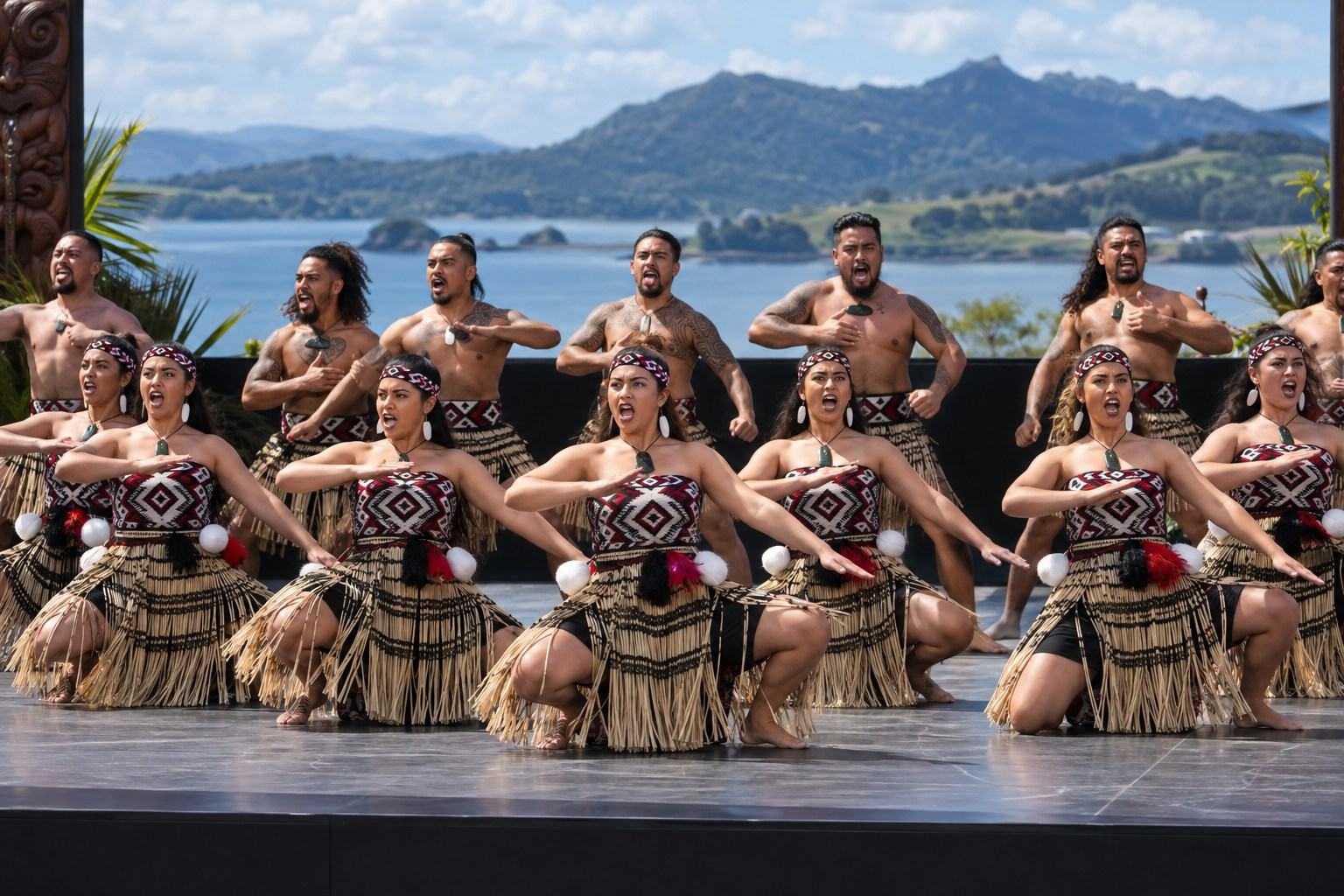
Māori performance traditions arose in social, spiritual and political settings specific to iwi and hapū. Haka, waiata, poi and gesture hold community narratives; one group cannot represent all Māori voices.
Kapa haka as a living ensemble
Contemporary kapa haka integrates distinct disciplines, including haka, poi and waiata-ā-ringa. Te Matatini showcases group creativity, rigorous practice and te reo Māori.
Pacific communities retain their own heritage
Samoan siva, Tongan tauʻolunga and Cook Islands ʻura thrive through family groups and public festivals in New Zealand. Their cultures are related through Oceanic connections but not interchangeable.
Migration and stage education
Scottish Highland dance, ballet and social dance entered local life through settlement and exchange. Institutions such as the New Zealand School of Dance foster classical and contemporary training.
The contemporary Aotearoa stage
Today Māori and Pacific choreographers, independent companies and hip-hop crews innovate while claiming credit for their own stories. Contemporary collaboration sits beside older living traditions.