Tap a region to read its story
Dance Regions & Traditions of Greece
Mainland, islands, ports and diaspora
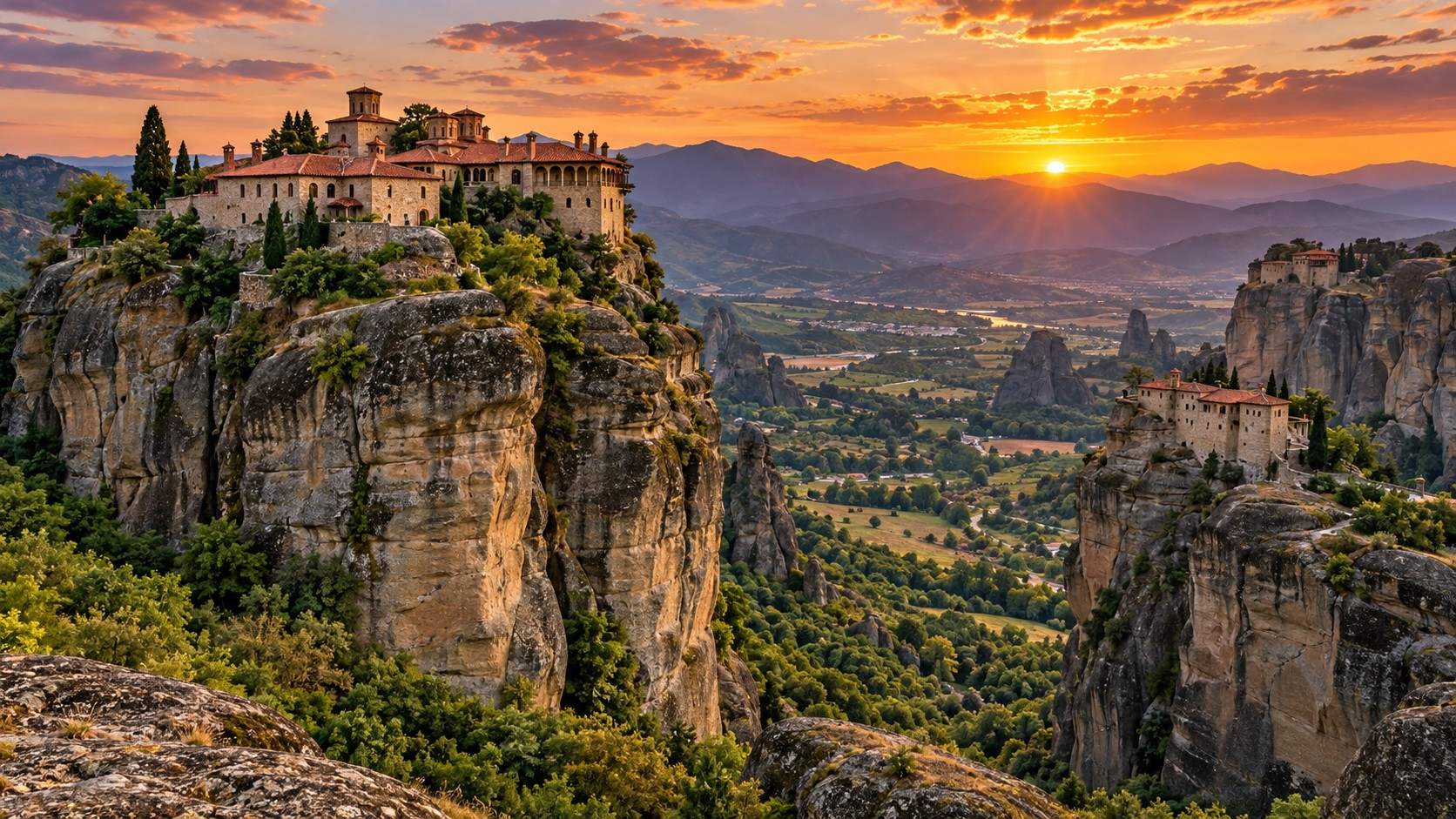
A ferry ride, a mountain road or a walk through an old port can take you into a different musical world. Meet the communities that have given Greek dance its wonderful variety. Images are artistic illustrations.
Peloponnese · communal dances
Kalamatianos circulates widely today, and the Peloponnese is part of its familiar geography. Regional variants cannot be inferred from one photograph.
Epirus & mainland highlands
Tsamiko and village festivities show controlled leading steps within collective support. Community songs and local orchestration matter.
Crete · lyra and fast steps
Cretan lyra music accompanies energetic Pentozali; local hospitality, village festivals and teachers shape its meaning.
Aegean islands · Ikaria and Syrtos
Ikaria’s panigyria invite communal dancing; other islands have their own Syrtos variants and different melodies.
Athens & Piraeus · urban rebetiko
Hasapiko and Zeibekiko belong to urban musical history; Sirtaki is a later cinematic synthesis that deserves its own timeline.
Thrace · belt-linked dancing
The Zonaradikos belt hold is a distinctive connection technique, not a feature of every Greek circle dance.
Pontic communities · living Black Sea roots
Serra and Pontic lyra preserve dance memories through migration, cultural organizations and family gatherings.
Today · stage, schools and new creation
Greek contemporary dance, ballet and regional folk teaching coexist, each with their own institutions and aesthetics.
Sources
- Visit Greece — Ikaria village festivals — Visit Greece — Ikaria village festivals
- Visit Greece — Pentozali, Crete — Visit Greece — Pentozali, Crete
- UNESCO — Tranos Choros and Syrrako Festival — UNESCO — Tranos Choros and Syrrako Festival
- UNESCO — Rebetiko — UNESCO — Rebetiko
- Greek Dances Theatre — Dora Stratou — Greek Dances Theatre — Dora Stratou
- Lyceum Club of Greek Women — Lyceum Club of Greek Women
- Greek National Opera Ballet School — Greek National Opera Ballet School
- Greek Ministry of Culture — State School of Dance — Greek Ministry of Culture — State School of Dance
- AKTINA Professional Dance School — AKTINA Professional Dance School
- Thessaloniki YMCA Folkloric Dance Classes — Thessaloniki YMCA Folkloric Dance Classes
- Lyceum Club of Greek Women — Lemnos — Lyceum Club of Greek Women — Lemnos
- Dionisos Traditional Dance — CIOFF — Dionisos Traditional Dance — CIOFF
- Megaron Athens — 2026/27 dance season — Megaron Athens — 2026/27 dance season
- Pina Bausch Foundation — Athens dates — Pina Bausch Foundation — Athens dates
- Greek National Opera — Giselle — Greek National Opera — Giselle
Traditions through the year
Dance history in numbers
Timeline
Swipe the timeline