··EN · ES · FA
Tap a region to read its story
Swipe the timeline
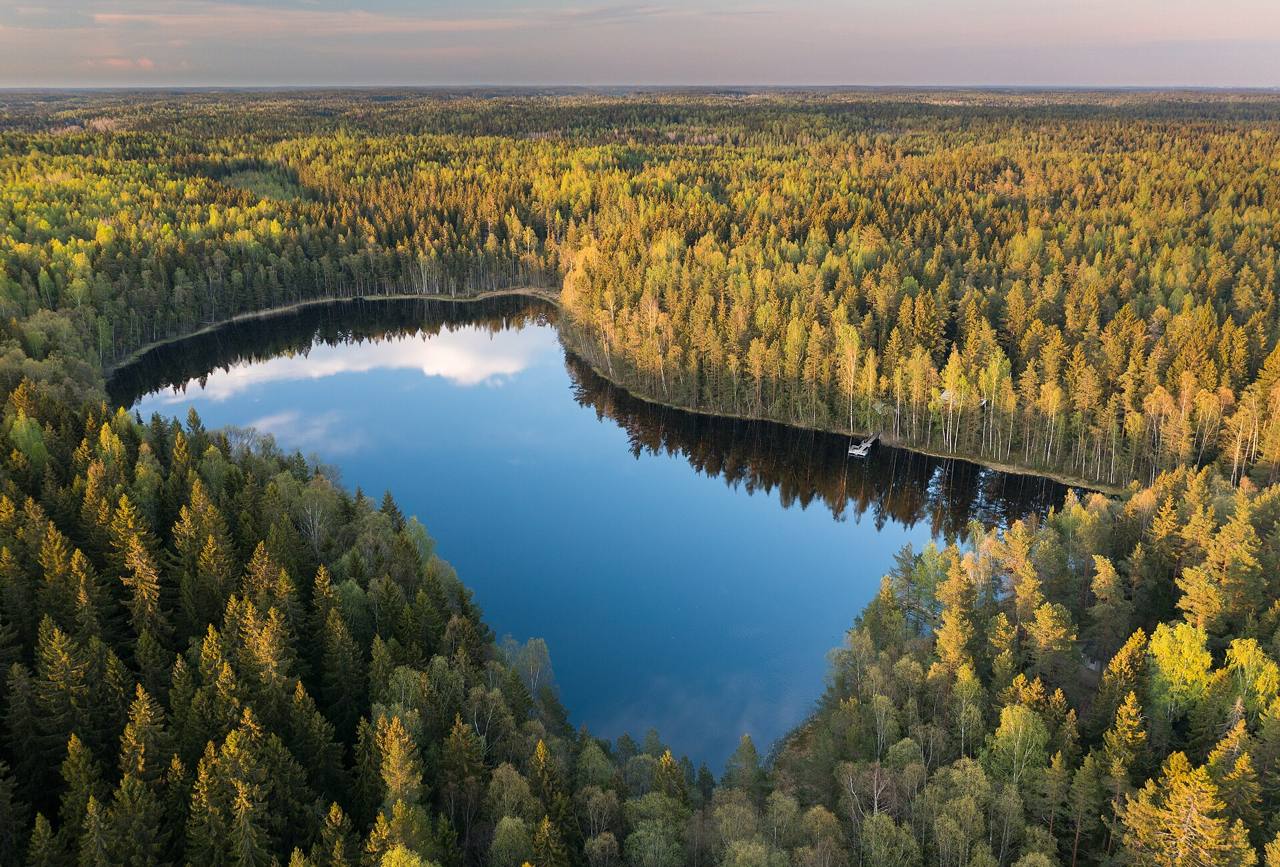
Finland is a land of about 188,000 lakes, deep forests and long summer nights, and its culture lives in very different places: a capital by the sea, castles from the Middle Ages, small villages that turn into festival towns every July and the snowy north where the northern lights dance across the sky. Here are ten famous places every visitor — and every dance lover — should know.
Founded in 1550 and capital of Finland since 1812, Helsinki is a compact, green city on the Baltic Sea. Its symbol is the white Lutheran Cathedral, completed in 1852 to designs by Carl Ludvig Engel, rising above Senate Square. For dance lovers the city is the heart of the stage: the Finnish National Opera and Ballet performs in its modern house by Töölönlahti bay, and Dance House Helsinki, opened in 2022 in the old Cable Factory, is the country's first venue built just for dance. In summer, terraces, harbour concerts and the Helsinki Festival in late August fill the city with life.
Just a short ferry ride from Helsinki's Market Square, Suomenlinna is one of the largest sea fortresses in the world. Sweden began building it in 1748 to protect its eastern coast; later it was held by Russia and finally by independent Finland. Its bastions, tunnels and old barracks spread over six islands and have been a UNESCO World Heritage Site since 1991. Today about 800 people live here, and on summer days locals and visitors come for picnics on the grassy walls, museums, cafés and open-air performances of the Suomenlinna Summer Theatre.
On the south-west coast, where the Aura river meets the sea, Turku was Finland's most important town for centuries and its capital until 1812. Its stone castle was founded around 1280 and is one of the largest surviving medieval buildings in the country, and Turku Cathedral, consecrated in 1300, is Finland's national shrine. The riverbanks are lined with restaurants and boats, and the city opens the door to the archipelago with its thousands of islands. The south-west and its Swedish-speaking coast also kept old couple dances such as the minuet and polska alive longer than most of Europe.
Tampere sits on a narrow strip of land between two big lakes, Näsijärvi and Pyhäjärvi, joined by the roaring Tammerkoski rapids. The rapids powered the factories that made it the 'Manchester of Finland', and today the red-brick mills are full of museums, cafés and stages. Above the city rises the Pyynikki ridge, one of the highest gravel ridges in the world, and the hillside district of Pispala with its colourful wooden houses. Tampere is also a folk dance city: it hosts the TRADI folk dance festival and the Pispala Schottische, where hundreds of dancers fill the streets.
In the flat farmland of South Ostrobothnia, Seinäjoki becomes the tango capital of the world every July. Since 1985 the Tangomarkkinat festival has gathered tens of thousands of visitors to dance, listen and follow the singing competition that crowns Finland's Tango King and Tango Queen — national celebrities from the moment they win. The town is also an architecture pilgrimage: the Aalto Centre by Alvar Aalto, with its town hall, library, theatre and the white Lakeuden Risti church with its 65-metre bell tower, is one of the most complete works of the great Finnish architect.
Kaustinen is a small rural municipality in Central Ostrobothnia, but in folk music it is world-famous. Every July since 1968 the Kaustinen Folk Music Festival — the largest in the Nordic countries — fills the village with fiddlers, singers and dancers from Finland and abroad, with concerts, dance stages and spontaneous jam sessions that go on through the light summer nights. Kaustinen fiddle playing and its dances were added to UNESCO's list of the Intangible Cultural Heritage of Humanity in 2021, and the Folk Arts Centre keeps the tradition alive all year.
In the middle of Lake Saimaa, Finland's largest lake, the stone towers of Olavinlinna rise straight out of the water. The castle was founded in 1475 and is the northernmost medieval stone fortress still standing. Every July its courtyard becomes a stage for the Savonlinna Opera Festival, started in 1912 by the soprano Aino Ackté: under a roof built over the old walls, audiences hear world-class opera surrounded by water and summer light. Around the town, the Lakeland is the home of the open-air dance pavilion, where Finns waltz and tango on warm summer nights.
In North Karelia, near the eastern border, the hills of Koli rise above the island-studded Lake Pielinen. The view from Ukko-Koli, 347 metres above sea level, is often called Finland's national landscape: in the 1890s painters such as Eero Järnefelt and Pekka Halonen and the composer Jean Sibelius came here searching for the Finnish soul. Koli has been a national park since 1991, with trails for hiking in summer, glowing colours in autumn and skiing in winter. Karelia is also the home of Karelian dances — quadrilles and song dances still taught by groups in nearby Joensuu.
Rovaniemi, the capital of Finnish Lapland, lies where the Ounasjoki and Kemijoki rivers meet, right on the Arctic Circle. The town was almost completely burned in 1944 at the end of the Lapland War and was rebuilt to a plan by Alvar Aalto, whose main streets are said to form the shape of a reindeer's antlers. Visitors cross the Arctic Circle line, learn about northern nature and peoples at the Arktikum museum, and meet Santa Claus at his village. In summer the sun does not set for weeks; in winter the long nights bring snow, reindeer safaris and the northern lights.
Far in the north, the village of Inari on the shore of huge Lake Inari is the centre of Sámi culture in Finland — the only Indigenous people of the European Union. Here you can visit the Siida museum about Sámi life and Arctic nature, and Sajos, the cultural centre where the Sámi Parliament meets. The Sámi tradition is famous for the joik, a song that 'calls' a person, animal or place rather than describing it. With very little light pollution, Inari is also one of the best places in Finland to see the aurora borealis, which can appear on most clear nights from autumn to spring.