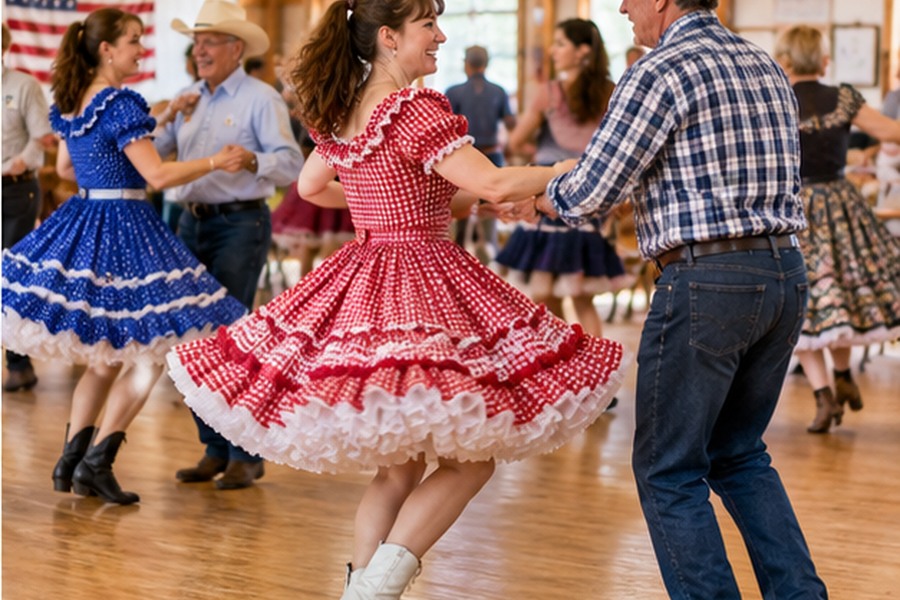
In a square dance, four couples face each other in a square while a caller improvises or recites the figures: allemande left, do-si-do, promenade. It grew from English, Scottish, Irish and French dances, reshaped on the American frontier, with African American fiddlers and callers playing an important role.
Square dancing is a social dance first: nobody performs alone, everyone depends on the other seven. ‘Modern Western’ square dancing uses standardized programs (Basic, Mainstream, Plus) maintained by CALLERLAB, so a dancer from Texas can join a square in Oregon. Traditional ‘old-time’ squares in Appalachia keep live fiddle music and regional figures. In the 1930s–50s educators such as Lloyd ‘Pappy’ Shaw in Colorado revived square dancing nationwide, and many states later named it their official folk dance. A 1999 resolution in Congress proposed making it the national folk dance, but it was never adopted.