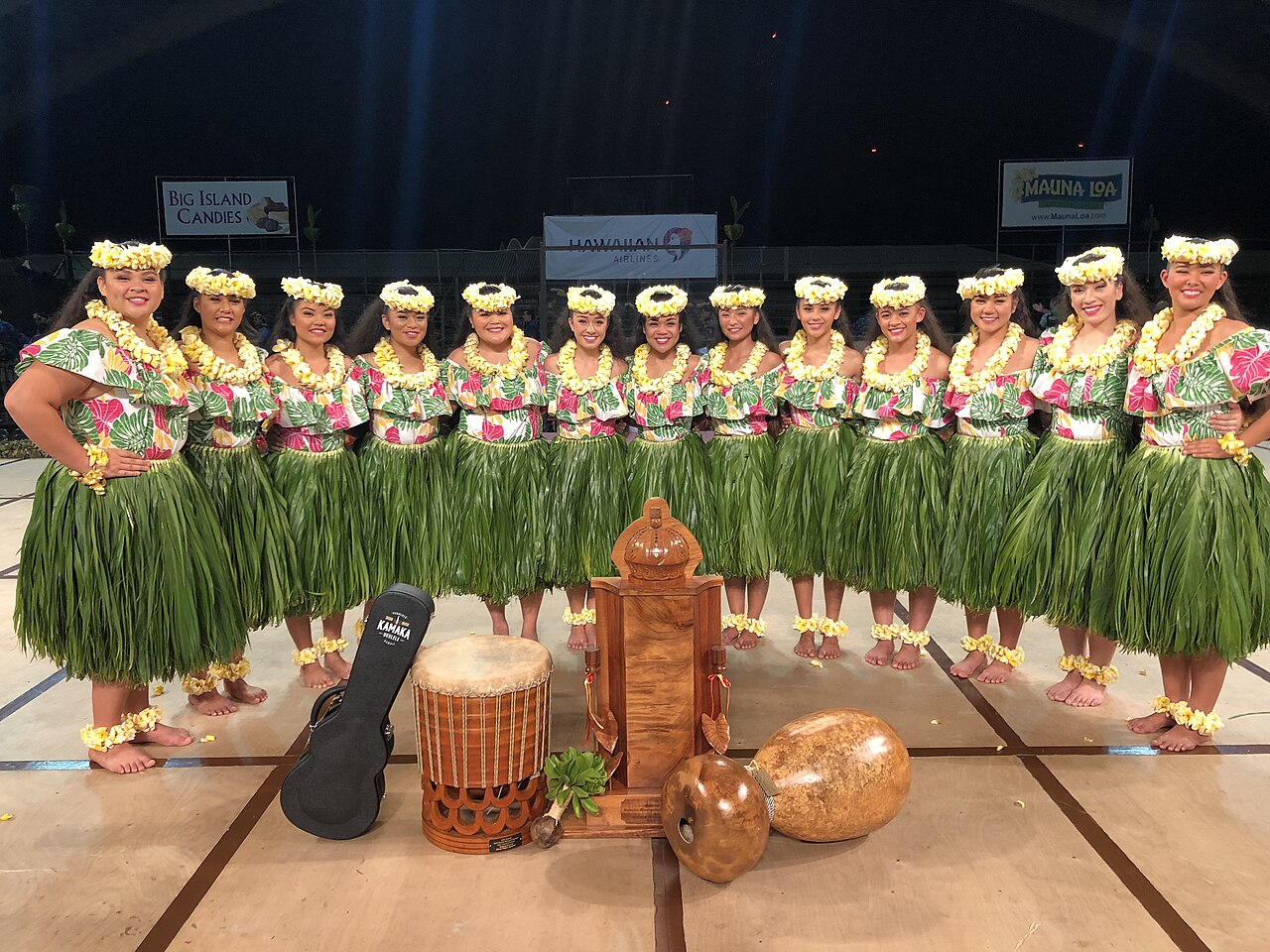
Hula is the Native Hawaiian art of telling stories through movement, chant (oli) and song (mele). Hula kahiko is the ancient style, danced to chant and percussion; hula ʻauana is the modern style, danced to songs with ukulele and guitar.
Before writing came to Hawaiʻi, hula carried genealogy, history and prayer. Missionary pressure in the 19th century pushed it out of public life until King David Kalākaua, the ‘Merrie Monarch’, brought it back to his court in the 1880s. His motto: ‘Hula is the language of the heart, and therefore the heartbeat of the Hawaiian people.’ Hula is taught in a hālau (school) by a kumu hula (master teacher) through lineages that go back generations. Hands describe the meaning of the words — rain, flowers, ocean, mountains — while the feet and hips keep the beat. Since 1964 the Merrie Monarch Festival in Hilo has been hula’s most prestigious stage.