
History
Vira do Minho
Minho · northern mainland
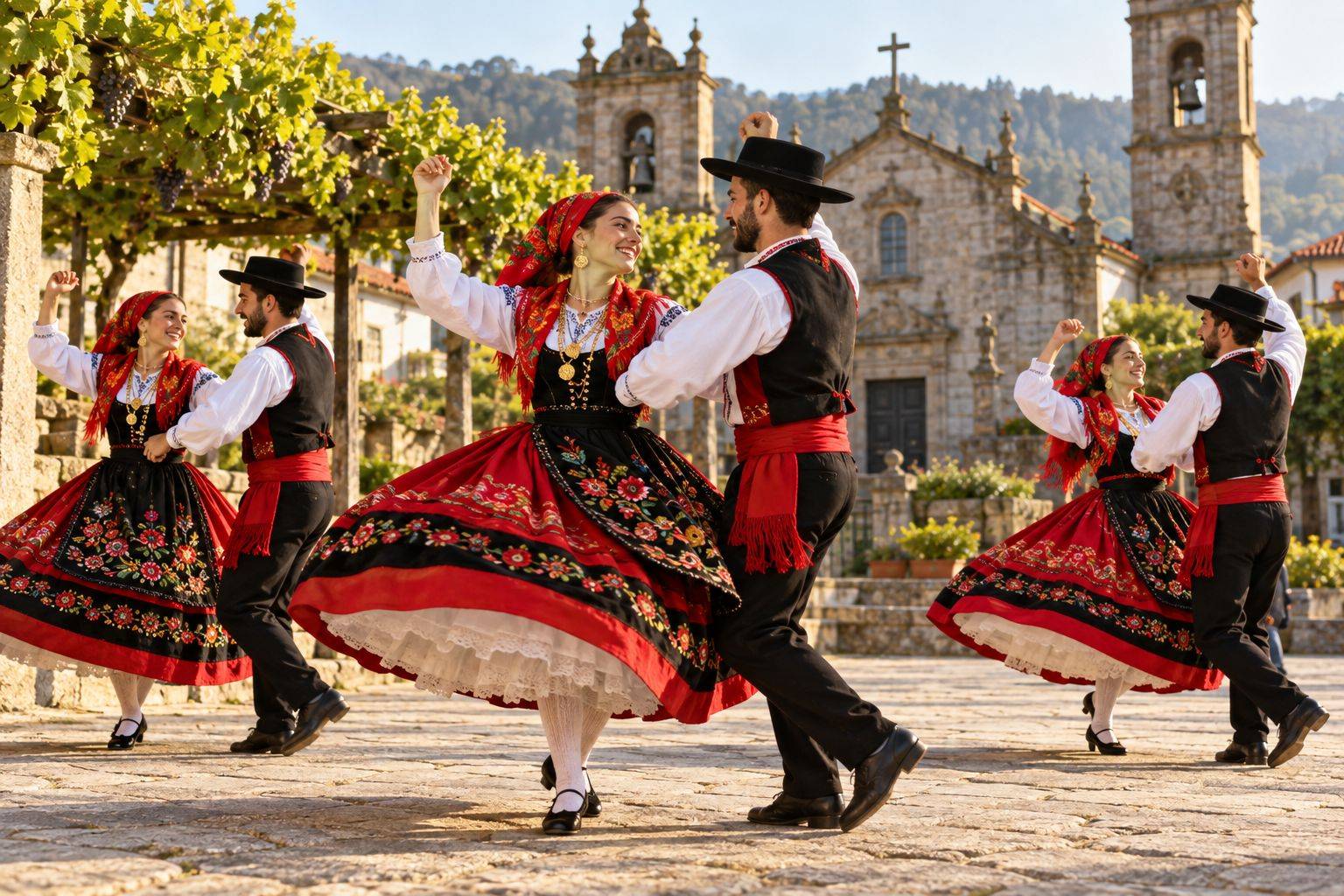
Quick turns, partner exchanges and swirling embroidered skirts in the folklore of Minho. The Vira is strongly associated with northern Portuguese ranchos folclóricos. Its public stage form reflects local memory and research as well as choreographic presentation; a single formation does not represent every village.
Why it matters
The Vira lets dancers turn toward one another and toward the wider circle. Its meaning lies in shared timing, joyful courtship-like exchanges and the pride of northern communities who preserve their local songs and clothing. Every turn is a conversation as much as a step.
Key facts
- Region: Minho · northern mainland
- Movement: Fast turning couples
- Setting: Community tradition and live performance
- Tradition: Portugal · living dance heritage
History timeline
- Regional roots — The Vira is strongly associated with northern Portuguese ranchos folclóricos. Its public stage form reflects local memory and research as well as choreographic presentation; a single formation does not represent every village.
- Living practice — Local ensembles continue interpreting this tradition in their own musical and social context.
Did you know?
- Partners and groups transform a shared pulse into a visible social conversation.
- A folklore video represents its named performers, not necessarily every village version.
Performances to watch
- Explore more filmed versions
Related dances
Why this dance?
How it's danced
Schools
Promote
Promote your classes on this page
Dancers