
History
Fandango do Ribatejo
Ribatejo · Santarém area
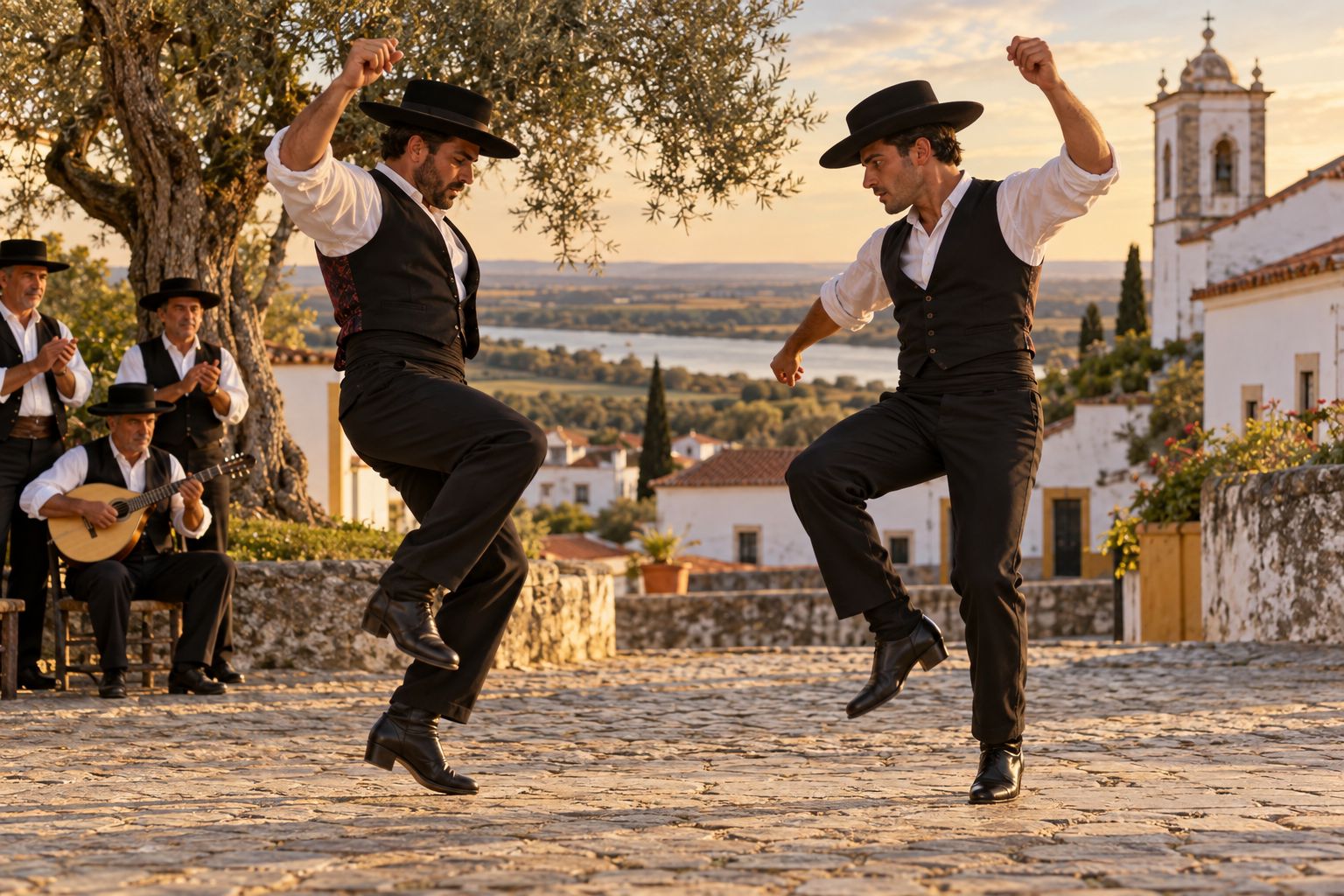
A proud face-to-face display of intricate footwork associated with Ribatejo heritage. The fandango has diverse Iberian histories. The Ribatejo form is a distinct Portuguese regional expression, frequently presented as a competitive-looking exchange of agile steps. It should not be conflated with Spanish flamenco.
Why it matters
Fandango is a dialogue of courage, balance and rhythmic invention. The performer shows skill, hears the response and answers without losing the pulse. In Ribatejo it also communicates regional identity, yet its competitive appearance is best read as expressive exchange rather than hostility.
Key facts
- Region: Ribatejo · Santarém area
- Movement: Virtuosic foot tapping
- Setting: Community tradition and live performance
- Tradition: Portugal · living dance heritage
History timeline
- Regional roots — The fandango has diverse Iberian histories. The Ribatejo form is a distinct Portuguese regional expression, frequently presented as a competitive-looking exchange of agile steps. It should not be conflated with Spanish flamenco.
- Living practice — Local ensembles continue interpreting this tradition in their own musical and social context.
Did you know?
- Dexterity and mutual challenge animate the dialogue between performers.
- A folklore video represents its named performers, not necessarily every village version.
Performances to watch
- Explore more filmed versions
Related dances
Why this dance?
How it's danced
Schools
Promote
Promote your classes on this page
Dancers