
History
Contemporary Dance in Portugal
Lisbon · Porto · national scene
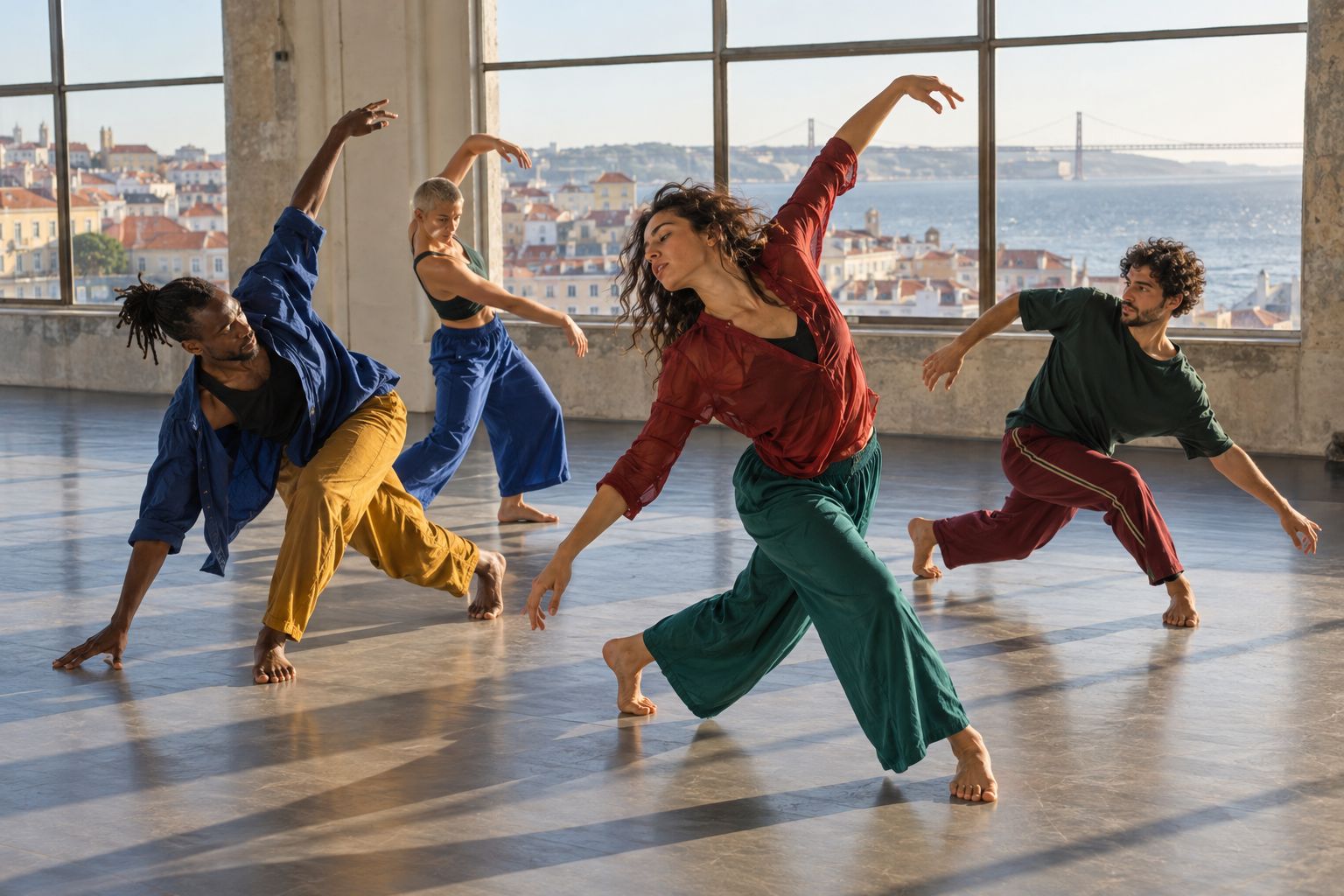
Innovative contemporary movement cultivated in studios, companies and independent festivals. Portuguese contemporary dance is a plural artistic field rather than a single fixed folk form. Schools such as Escola Superior de Dança and Forum Dança, the Companhia Nacional de Bailado, and DDD Festival contribute to education, performance and experimentation.
Why it matters
Contemporary dance gives Portuguese artists room to question identity, memory and the possibilities of the moving body. A performance can be intimate, political, abstract or playful, with no single required step. Its significance is in creative inquiry and dialogue between choreographer, performers and audiences.
Key facts
- Region: Lisbon · Porto · national scene
- Movement: Creative stage movement
- Setting: Stage and training studios
- Tradition: Portugal · living dance heritage
History timeline
- Regional roots — Portuguese contemporary dance is a plural artistic field rather than a single fixed folk form. Schools such as Escola Superior de Dança and Forum Dança, the Companhia Nacional de Bailado, and DDD Festival contribute to education, performance and experimentation.
- Living practice — Local ensembles continue interpreting this tradition in their own musical and social context.
Did you know?
- Movement may question identity, memory, space and the relationship between performer and audience.
- A folklore video represents its named performers, not necessarily every village version.
Performances to watch
- Explore more filmed versions
Related dances
Why this dance?
How it's danced
Schools
Promote
Promote your classes on this page
Dancers