
History
Chula
Minho and northern Portugal
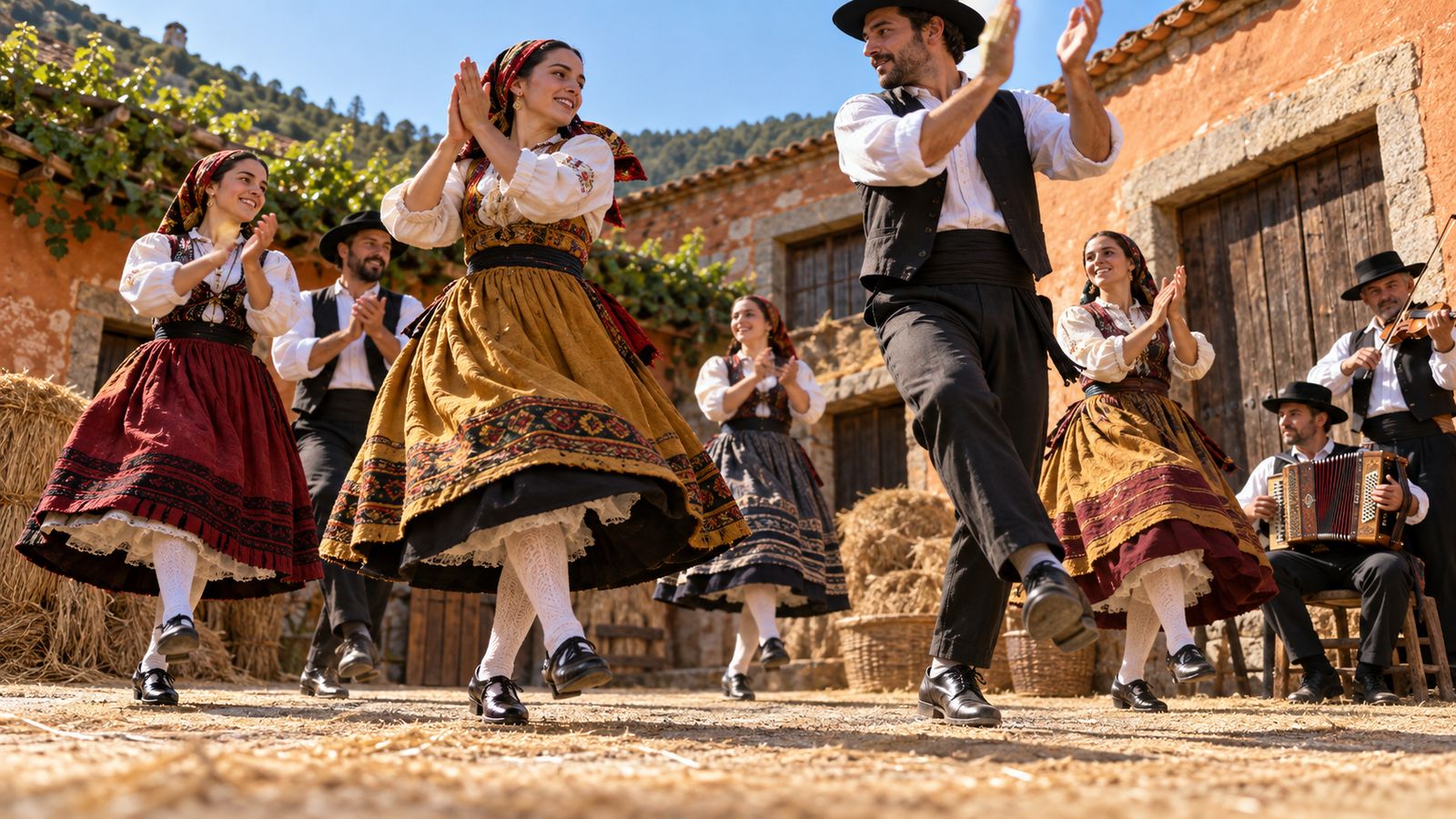
Rhythmic stepping and changing figures within northern community traditions. Chula is a name used for different local dance and musical practices. Descriptions should identify the municipality or tradition-bearers rather than implying one nationally fixed choreography.
Why it matters
Chula celebrates the pleasure of rhythmic skill and the energy of gathering. Dancers listen, challenge themselves and answer the music through precise accents. Its different local versions also remind us that cultural inheritance survives through adaptation, not through perfect uniformity.
Key facts
- Region: Minho and northern Portugal
- Movement: Rhythmic footwork
- Setting: Community tradition and live performance
- Tradition: Portugal · living dance heritage
History timeline
- Regional roots — Chula is a name used for different local dance and musical practices. Descriptions should identify the municipality or tradition-bearers rather than implying one nationally fixed choreography.
- Living practice — Local ensembles continue interpreting this tradition in their own musical and social context.
Did you know?
- Precision, play and neighborly participation meet in the public dance.
- A folklore video represents its named performers, not necessarily every village version.
Performances to watch
- Explore more filmed versions
Related dances
Why this dance?
How it's danced
Schools
Promote
Promote your classes on this page
Dancers