
History
Cana-Verde
Northern mainland communities
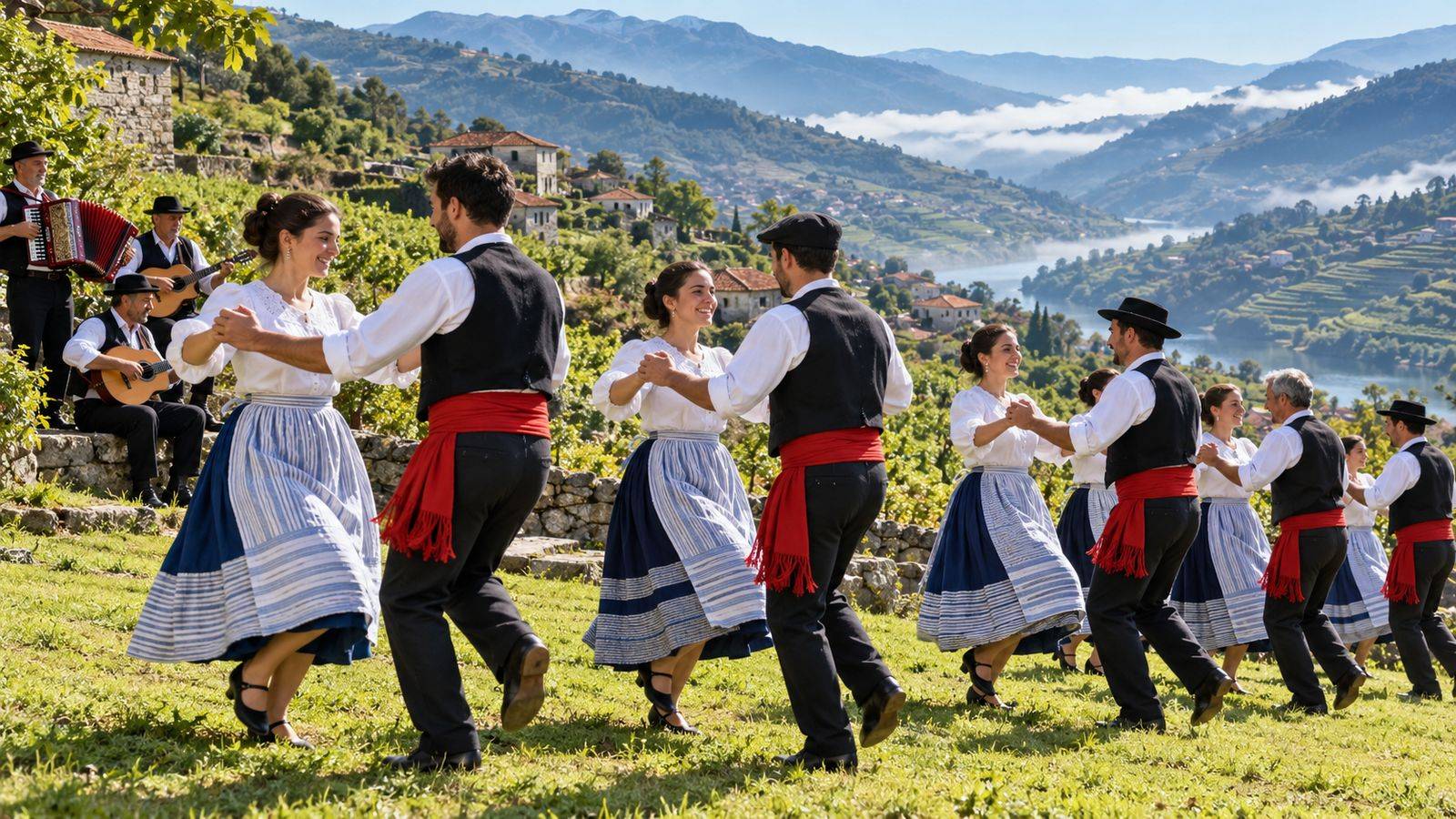
A named regional social dance with lively steps and locally varying formations. Cana-Verde is documented among Portugal’s varied rural folk-dance names. Local music and customs deserve attention; stage renditions are selected interpretations rather than a universal manual.
Why it matters
Cana-Verde turns a repeated pattern into a shared invitation. Attention to a partner, to the musical phrase and to the whole group creates a small community on the dance floor. Because its regional variants differ, learning from the local bearers is part of respecting the tradition.
Key facts
- Region: Northern mainland communities
- Movement: Partner and group figures
- Setting: Community tradition and live performance
- Tradition: Portugal · living dance heritage
History timeline
- Regional roots — Cana-Verde is documented among Portugal’s varied rural folk-dance names. Local music and customs deserve attention; stage renditions are selected interpretations rather than a universal manual.
- Living practice — Local ensembles continue interpreting this tradition in their own musical and social context.
Did you know?
- Shared turning and responsive footwork express conviviality.
- A folklore video represents its named performers, not necessarily every village version.
Performances to watch
- Explore more filmed versions
Related dances
Why this dance?
How it's danced
Schools
Promote
Promote your classes on this page
Dancers