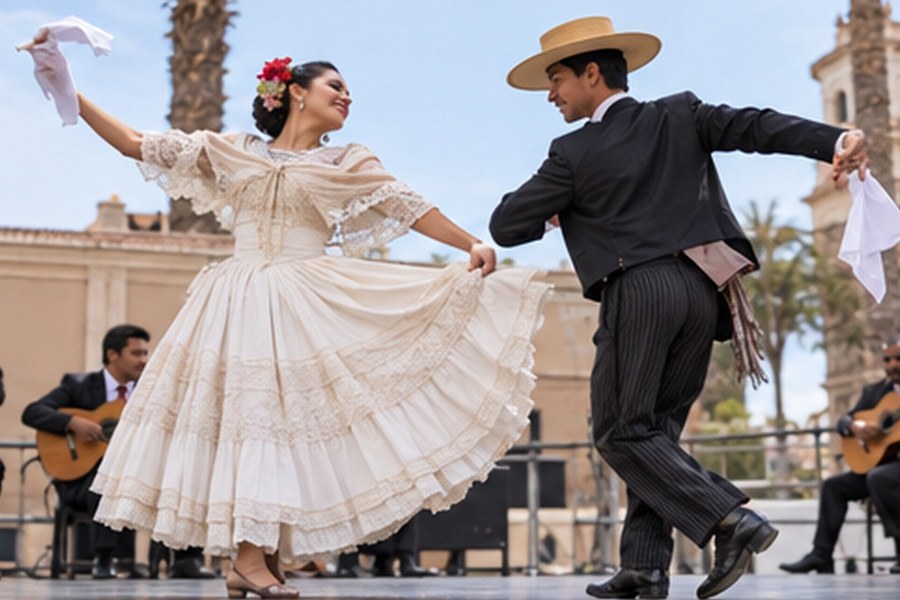
The zamacueca was the most popular couple dance of Lima and the Peruvian coast in the early 19th century. A man and a woman, each with a handkerchief, perform a flirtatious game of advance and retreat to guitar, cajón and clapping. Carried along the Pacific coast, it became the ancestor of Peru’s marinera, Chile’s cueca and Argentina’s zamba.
The zamacueca took shape in colonial and early republican Lima, where Afro-Peruvian musicians, Spanish dance forms and Andean influences mixed in neighbourhood parties and ‘jaranas’. Afro-Peruvians played a key role in its rhythm and style, and the cajón — Peru’s wooden box drum — became its heartbeat. In the 1820s–1840s the dance travelled to Chile, Bolivia and Argentina, where it evolved into the cueca, the zamba and other dances. In Peru it gradually became the ‘chilena’ and then, after 1879, the marinera. Today folk ensembles revive the zamacueca on stage to show audiences the shared roots of these national dances.