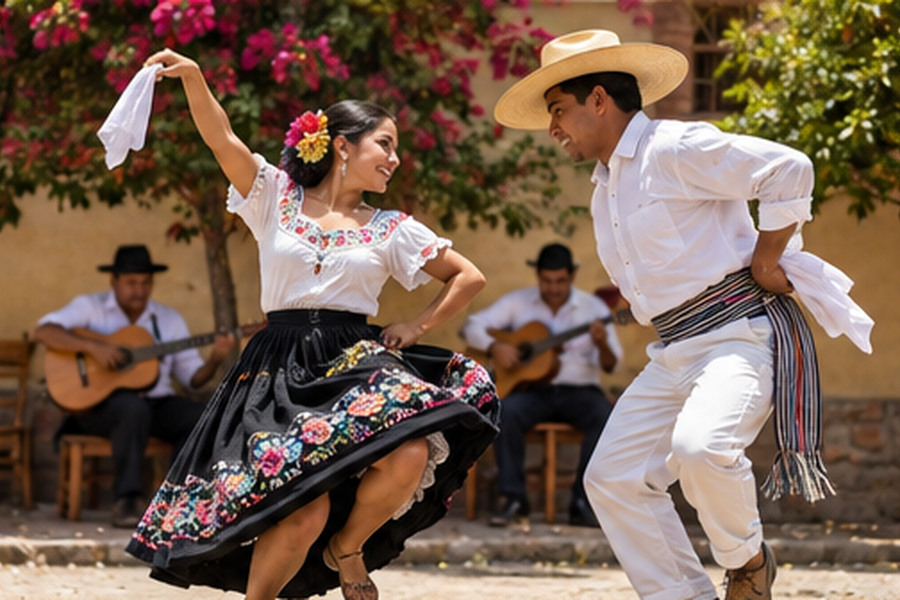
Tondero is the festive courtship dance of Piura and Lambayeque on Peru’s northern coast. Couples imitate the courtship of birds, circling, approaching and retreating with handkerchiefs, light zapateo and graceful turns. Its music, played on guitar, cajón and sometimes harp, moves through three parts: the glosa, the dulce and the fuga.
Tondero was born in the farming towns and dry carob forests of Piura, especially around Morropón, where Spanish, Afro-Peruvian and Indigenous Tallán traditions met on haciendas and in villages. It is older and more rural than the marinera norteña and keeps a cheerful, country character, often danced at harvest fiestas and family celebrations. The three-part music tells a small story: the glosa (an invitation, in a major key), the dulce (a tender sung section, in a minor key) and the fuga (a fast, joyful ending). Morropón proudly calls itself the ‘capital of tondero’, and local festivals and school contests keep the dance alive across the north.