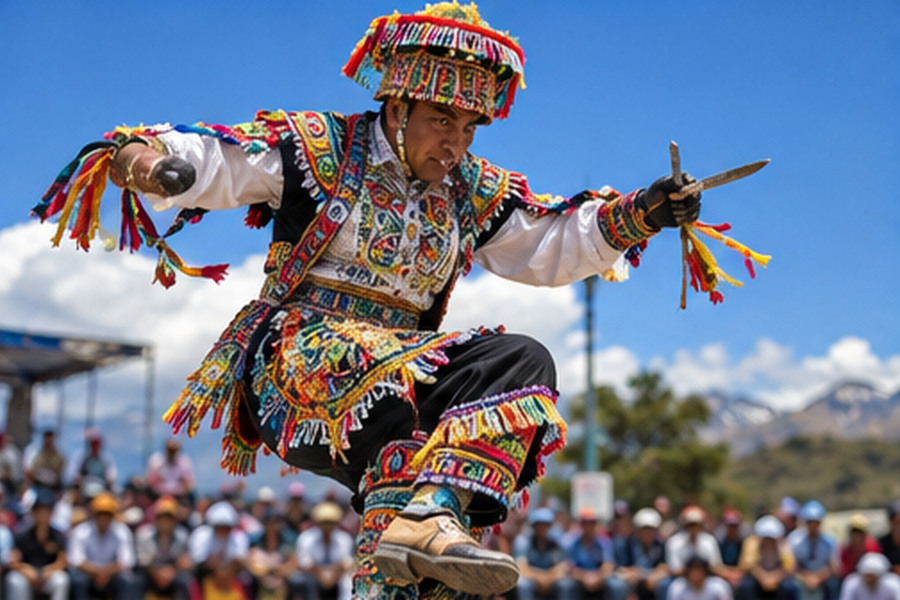
In the Scissors Dance (danza de tijeras), dancers called danzaq compete in pairs or teams, each clicking a pair of separate iron blades in the right hand while performing jumps, acrobatics and feats of endurance to violin and harp. The contest, called atipanakuy, can last many hours. UNESCO inscribed the dance on its Representative List of Intangible Cultural Heritage in 2010.
The Scissors Dance belongs to Quechua communities of Ayacucho, Huancavelica, Apurímac and neighbouring areas. Dancers are believed to receive their strength from the mountain spirits (apus) and from pacts sealed in ritual; each danzaq trains for years with a master and performs with a violinist and harpist who form his ‘team’. The dance is linked by many scholars to the Taki Unquy movement of the 1560s, when Andean dancers resisted colonial religion. The atipanakuy takes place at patron-saint festivals, especially during the dry season. Feats range from acrobatic leaps to ordeals of pain and endurance, and dancers wear richly embroidered costumes with mirrors and sequins. The writer José María Arguedas immortalized the danzaq in his story ‘The Agony of Rasu-Ñiti’. Today scissors dancers also perform in Lima and abroad, while the core of the tradition stays in the highland communities.