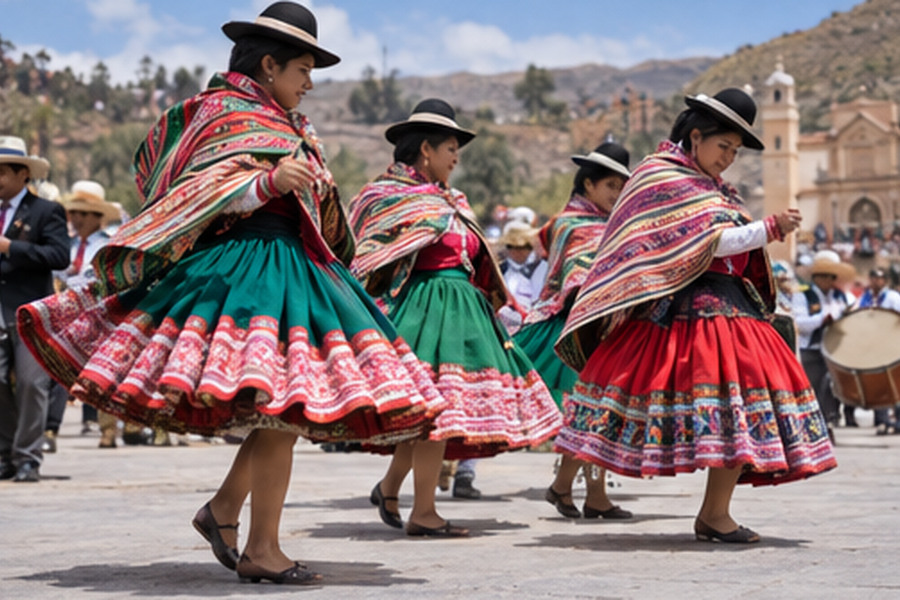
Sarawja is a music-and-dance tradition of Aymara communities in the highlands of Moquegua, in southern Peru. Young men and women form circles and lines, singing verses in Aymara and Spanish to the sound of flutes such as the pinkillo and string instruments, especially during the rainy season and festivals around Easter and the Holy Cross. In December 2025 UNESCO inscribed it on the Representative List of Intangible Cultural Heritage.
Sarawja brings young people of different communities together to sing, dance and get to know each other. Its verses, often improvised, speak of love, nature, livestock, migration and community life, and the singing alternates between groups in a musical dialogue. Elders pass on the melodies, while local schools and festivals now help keep the tradition strong among youth who have moved to towns. With the UNESCO inscription in 2025, the Sarawja joined Peru’s other internationally recognized dances, such as the Scissors Dance, the Huaconada and the Wititi. Recognition is a celebration, but the tradition belongs to the Aymara communities of Moquegua, who decide how it is taught and shared.