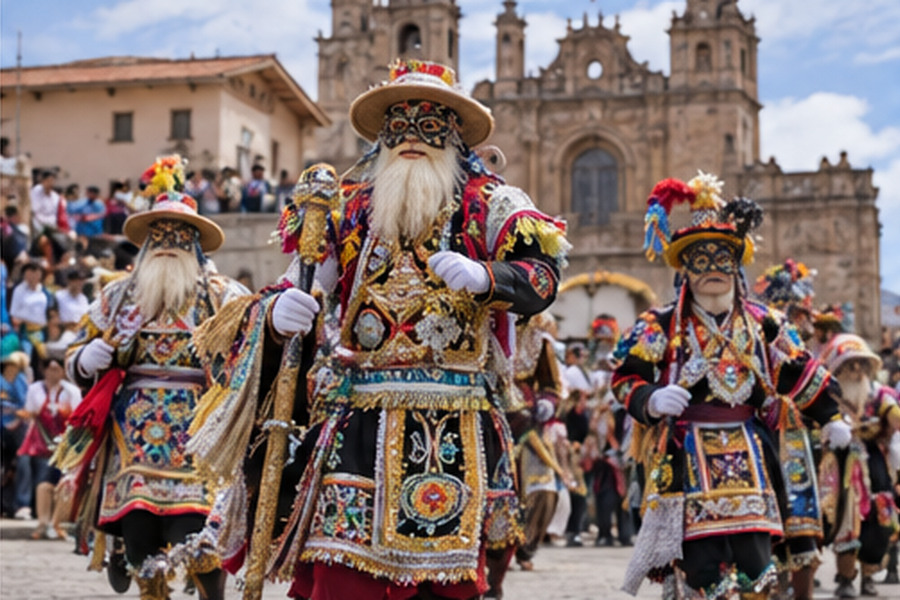
The Qhapaq Qolla represents the Qollas — herders and traders from the Lake Titicaca altiplano who travelled to Cusco with their llamas. Dancers wear knitted masks, white hats, colourful shawls and carry slings and a stuffed vicuña or alpaca. They are among the most important dance groups of the Fiesta de la Virgen del Carmen in Paucartambo, held every July.
Paucartambo, a colonial town in the Cusco region, celebrates the Virgen del Carmen (Mamacha Carmen) from about 15 to 18 July with nearly twenty dance groups (comparsas), each representing a character or people from Andean history: the Qhapaq Qolla, the Qhapaq Chuncho (Amazonian warriors), the Saqra devils who climb the rooftops, the Contradanza and others. Together they form a living theatre of Andean memory. The Qhapaq Qolla are considered among the Virgin’s most devoted followers; they sing in Quechua and dance with slow, swaying steps that imitate the long journeys of the herders. The festival has been declared Cultural Heritage of the Nation, and similar Qolla figures dance at the Qoyllur Rit’i pilgrimage in the mountains near Cusco.