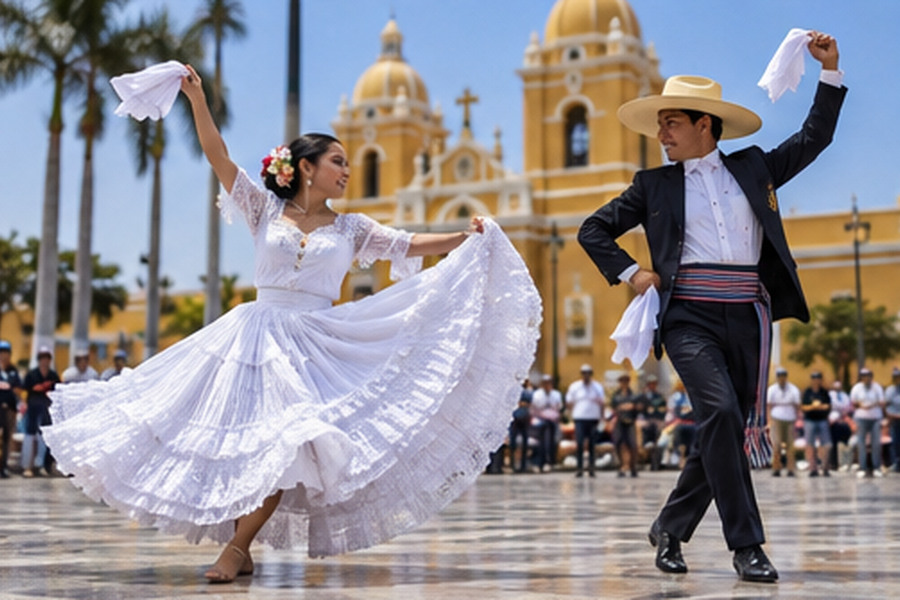
The marinera is Peru’s best-known couple dance. In the northern style, the man — often in a poncho and straw hat — courts the woman, who dances barefoot in a wide embroidered skirt; both wave white handkerchiefs while their footwork answers the music in a playful, proud conversation. It is danced at weddings, school festivals and in fiercely competitive contests.
The marinera grew from the zamacueca, a 19th-century couple dance of coastal Peru shaped by Spanish, Afro-Peruvian and Andean influences. During the War of the Pacific (1879), it was renamed ‘marinera’ in honour of the Peruvian Navy, and the name stuck. Over time it developed regional forms: the courtly marinera limeña, the Andean marinera serrana and puneña, and the lively marinera norteña of La Libertad and Lambayeque. Trujillo is its capital. Every January since 1960 the city hosts the Concurso Nacional de Marinera, with thousands of couples from children to seniors, and the Peruvian Paso horse even ‘dances’ marinera with a rider and a barefoot partner. The marinera was declared Cultural Heritage of the Nation in 1986, and 7 October is celebrated as the Day of the Marinera.