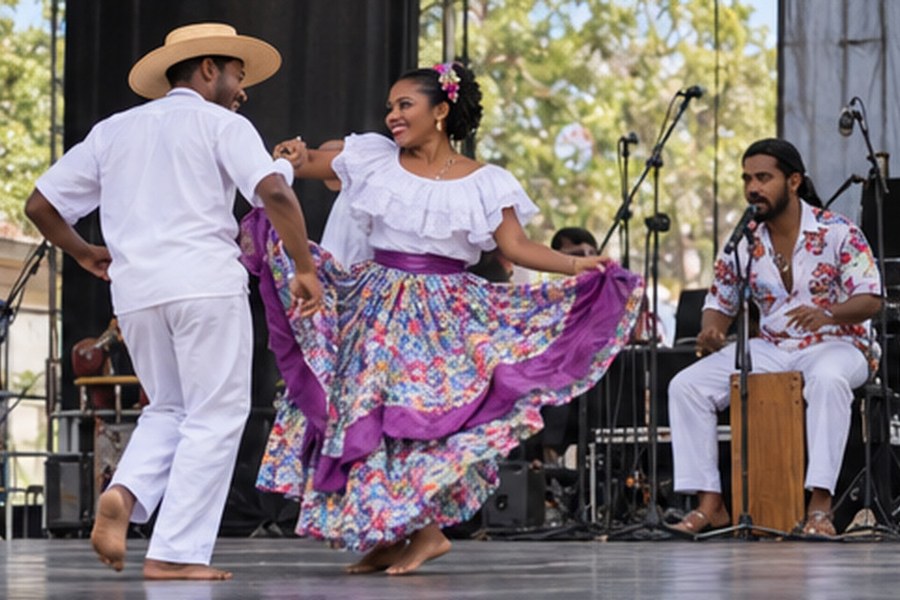
Landó is an Afro-Peruvian music and dance with a slow, swaying 12/8 feel. Dancers move with grounded steps, rolling hips and expressive arms, often in couples who approach each other with gentle flirtation. Songs such as ‘Toro mata’ and ‘Samba malató’ made landó famous far beyond Peru.
Landó is believed to descend from the ‘lundú’, a dance brought by enslaved Africans from the Congo–Angola region that also influenced Brazilian music. In Peru it nearly disappeared, surviving only in fragments of songs remembered by older Afro-Peruvian families. In the late 1960s and 1970s, researchers and artists — Nicomedes and Victoria Santa Cruz, Caitro Soto, Chabuca Granda and the group Perú Negro — rebuilt landó from these memories and new compositions. Singer Susana Baca later carried it to world stages, winning a Latin Grammy in 2002. Landó is now part of every Afro-Peruvian ensemble’s repertoire.