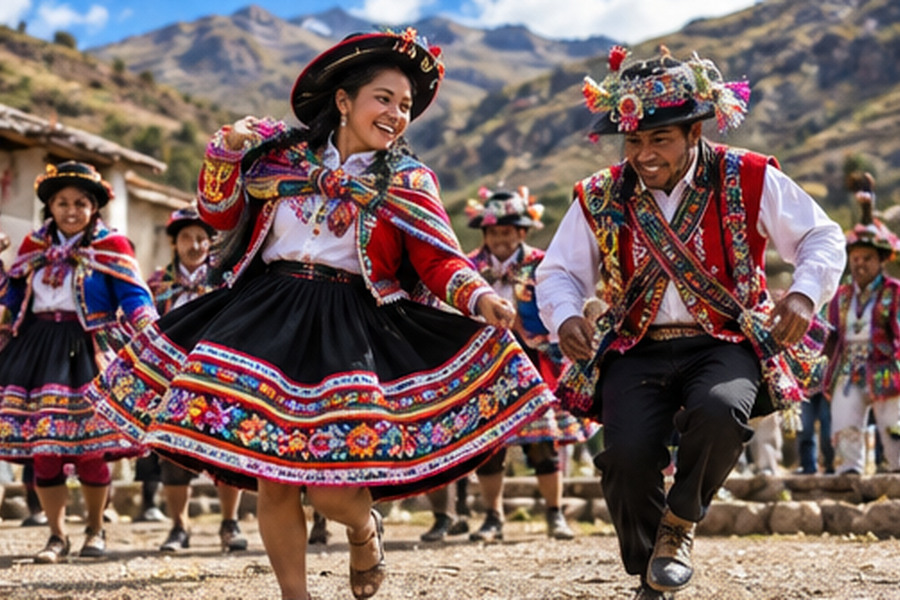
Huayno (wayno in Quechua) is the most widespread music and dance of the Peruvian Andes. Couples and groups dance with quick stamping steps, turns and handkerchiefs to a lively 2/4 rhythm, often finishing with a faster ‘fuga’. Every region has its own style — from Ayacucho’s guitar huaynos to Puno’s brass bands and Cusco’s harp and violin.
Huayno has pre-Hispanic roots in Andean song and dance and absorbed Spanish instruments and forms after the conquest. It is sung in Quechua, Spanish or both, about love, migration, nature and loss, and is danced at weddings, patron-saint festivals, carnivals and family gatherings — wherever Andean people meet. In the 20th century, migration to Lima carried huayno to the coast, where radio, records and coliseums made stars of singers such as Pastorita Huaracina, Flor Pucarina and the Picaflor de los Andes. Today ‘huayno con arpa’, ‘huayno sureño’ and modern pop-huayno fill festivals and streaming playlists, and huayno remains the shared language of Andean identity.