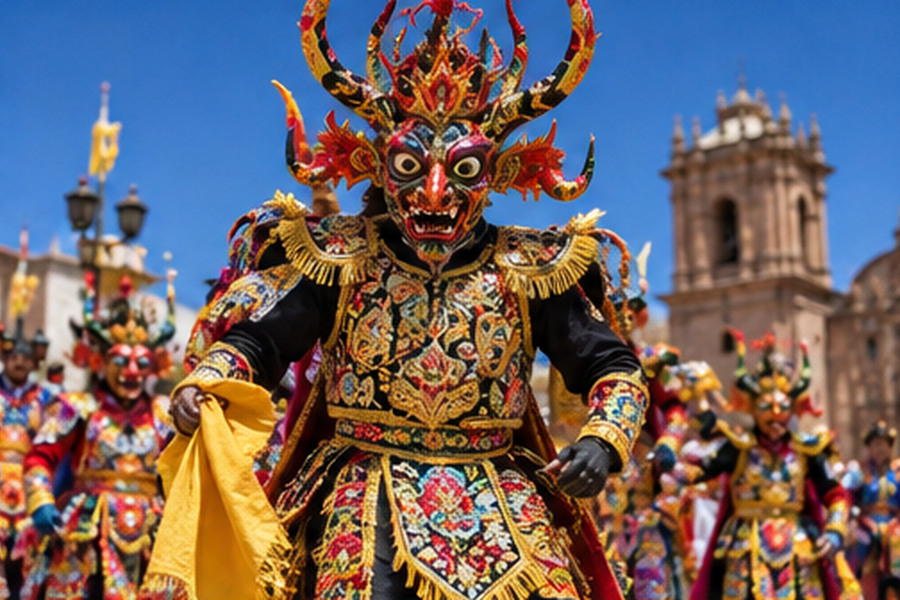
The Diablada is a masked dance in which troupes of devils with huge, colourful masks — horns, dragons and bulging eyes — are led by the Archangel Michael, with the china supay (she-devil) and figures of the seven deadly sins. In Puno it is one of the stars of the Festividad de la Virgen de la Candelaria every February, with hundreds of dancers and brass bands in each group.
The Diablada combines Catholic morality plays introduced in the colonial era with Andean beliefs about the underworld (uku pacha) and the mines, where miners honoured a figure called the ‘tío’. It is shared by Puno in Peru and Oruro in Bolivia, and both countries value it as part of their heritage — a reminder that festivals cross today’s borders around Lake Titicaca. Puno’s Candelaria, inscribed by UNESCO in 2014, gathers tens of thousands of dancers. Its highlights are the contest of costumed groups in the stadium and the long parade in ‘trajes de luces’ (costumes of light). Mask-makers in Puno craft each diablo mask by hand, and the Diablada Puneña has been declared Cultural Heritage of the Nation by Peru’s Ministry of Culture.