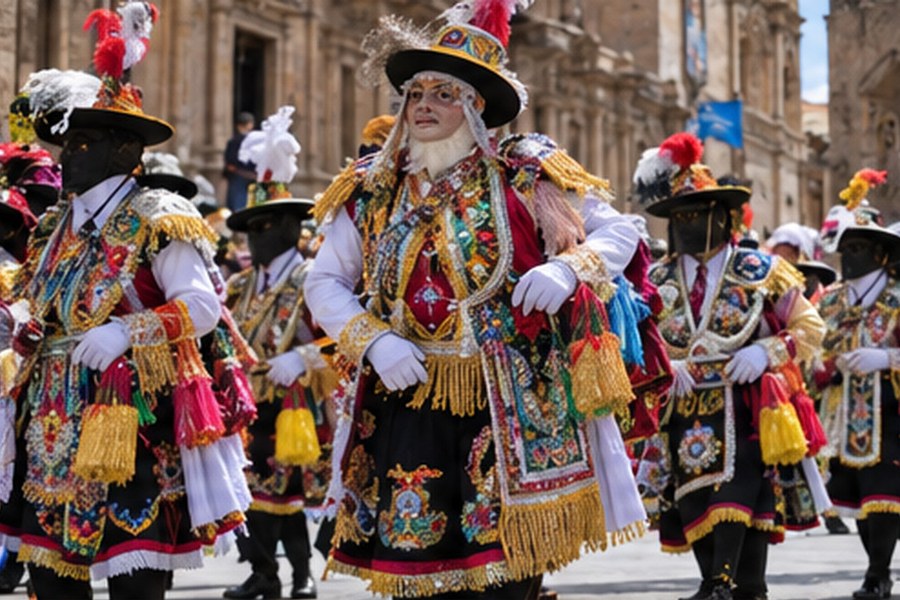
The Chonguinada is a dance of the Mantaro Valley in Junín in which dancers wear fine wire-mesh masks with pink faces and blue eyes, long embroidered capes, coin-covered sashes and plumed hats. Their slow, elegant steps imitate — and gently mock — the European minuet and contradance of colonial aristocrats.
Like many Andean dances, the Chonguinada uses parody: Indigenous and mestizo dancers copied the manners of Spanish and creole elites they saw at colonial balls, turning them into a festive performance full of irony. Its name is often linked to the town of Chongos Alto, though the dance is shared across the valley and especially associated with Huancayo, Concepción and Jauja. The Chonguinada is performed at patron-saint festivals, especially those of the Virgin and of local saints, by organized groups who spend large sums on costumes. Peru’s Ministry of Culture has declared the Chonguinada of Junín Cultural Heritage of the Nation, recognizing its costumes, music and social organization.