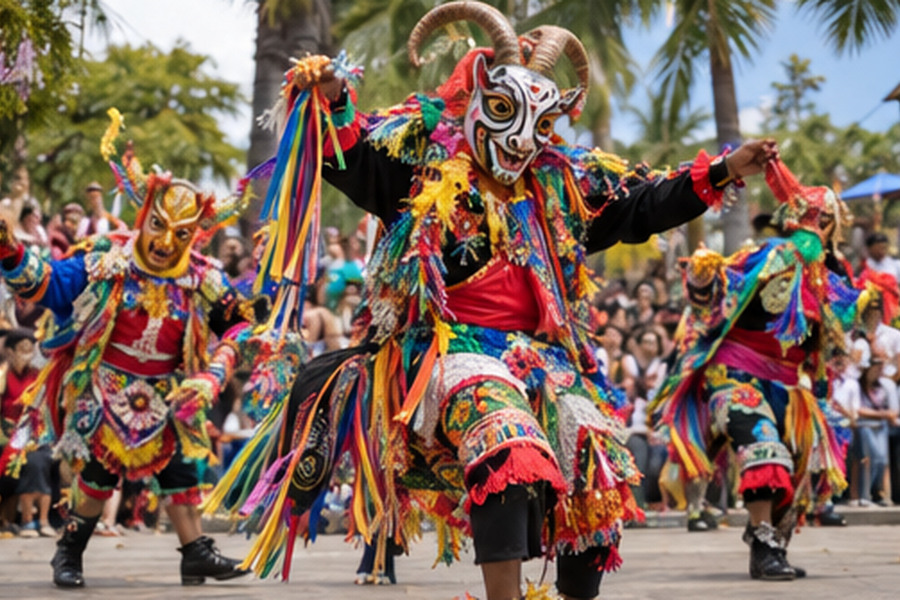
Lamas, a hill town in the San Martín region, is known as Peru’s ‘folkloric capital’ of the Amazon. During carnival, Kichwa-Lamista families of the Wayku neighbourhood and nearby communities dance in circles to flutes (pífanos) and drums, wearing colourful skirts and beaded necklaces, and celebrate the humisha — a tree decorated with gifts that couples take turns cutting down.
The Kichwa-Lamista people of San Martín have their own language, dress and festive calendar, combining Amazonian and Andean roots. Carnival (February–March) and the feast of Santa Rosa de Lima in August are the high points of Lamas’s year, with music of flutes and drums, dances in circles, and shared drinks and food. The humisha (also called yunsa) is a palm or tree decorated with fruits, toys and gifts; couples dance around it and strike it with an axe until it falls, and the couple who fells it sponsors the next year’s celebration. Lamas’s carnival is one Amazonian tradition among many: Peru’s Amazon is home to dozens of Indigenous peoples, each with distinct music and ceremonies.