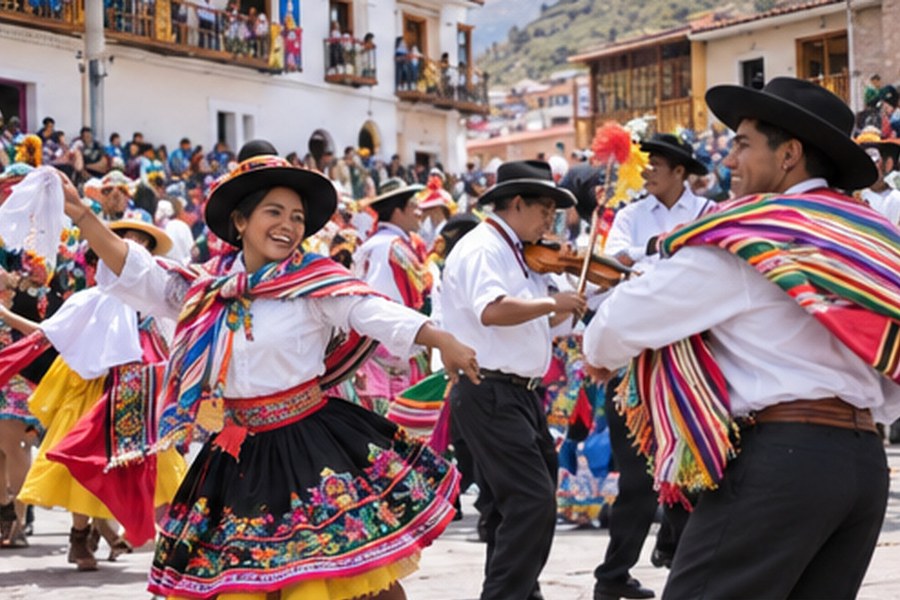
In February, Ayacucho’s carnival brings comparsas — groups from neighbourhoods and villages — into the streets with guitars, mandolins, quenas and tinyas. Dancers move in lines and circles with handkerchiefs and slings, while singers trade witty, sometimes political verses. The carnival ends with games, water and flour fights and community feasts.
Carnival in the Andes coincides with the rainy season, when crops ripen and communities celebrate fertility and abundance. In Ayacucho, the Quechua word ‘pukllay’ (play) names the festive spirit of these days: young people court, communities compete in song and dance, and humour lets people criticize authorities and current events. Each district and village — Paccha, Huamanga, Huanta and many more — has its own comparsas, songs and costumes. The Ayacucho Carnival has been declared Cultural Heritage of the Nation, and in recent years Peru’s Ministry of Culture has also recognized specific community carnivals, such as that of Paccha.