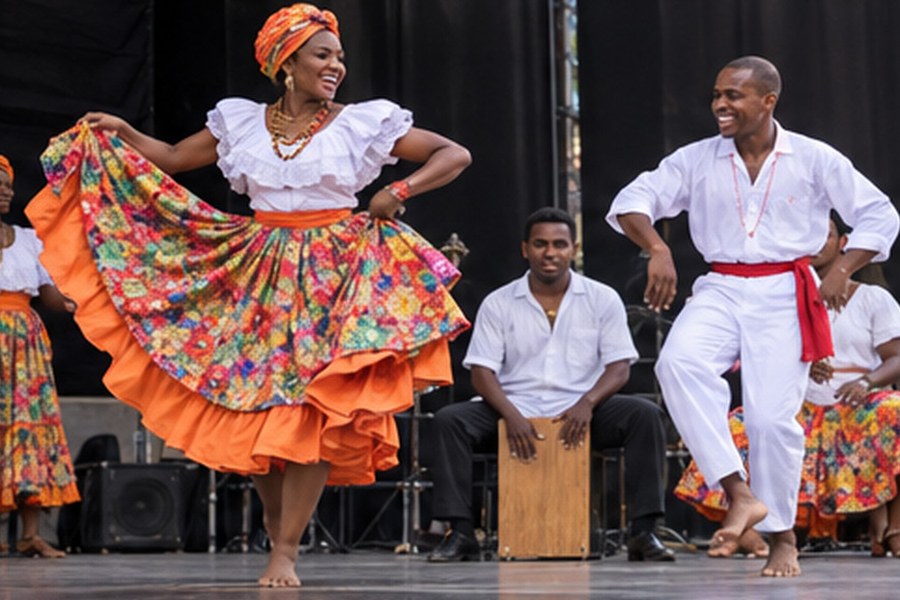
In the alcatraz, a couple dances a fast festejo-like rhythm while one partner tries to set fire to a paper cone (the ‘cucurucho’) tied at the back of the other’s waist, using a lit candle. The dancer being chased twists and swings the hips to escape. The audience cheers and shouts ‘¡quema, quema!’ — burn it! — as the game heats up.
The alcatraz belongs to the family of Afro-Peruvian festive dances along with festejo and the ‘son de los diablos’. It probably developed in the 19th century in coastal towns and haciendas as a competitive party game, mixing humour, flirtation and agility. Its name refers to the pelican (alcatraz in Spanish), perhaps because of the dancers’ swooping movements. The revival groups of the 1950s–70s brought the alcatraz back to stages, and today it is a favourite at school festivals and Afro-Peruvian shows. Professional dancers make it look effortless, but the candle means it is a dance for experienced performers — never try it with real fire without supervision.