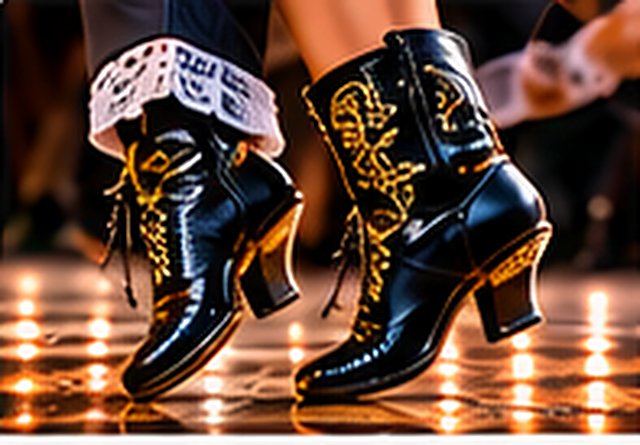
Zapateado is Mexico's art of percussive footwork: heels and soles drum out rhythms on a wooden tarima, talking with the guitars, harps and violins.
Zapateado (from zapato, shoe) came from Spanish fandango dances and mixed in colonial Mexico with African and Indigenous rhythms. Every region has its own accent. In southern Veracruz, the son jarocho fandango gathers musicians around a wooden platform, the tarima, and couples take turns on it, their heels becoming another instrument of the band; the great gathering is Tlacotalpan's Candelaria festival. In the Huasteca, huapango couples tap lightly and quickly to violin, jarana huasteca and quinta huapanguera, with falsetto singing. In Jalisco the zapateado powers the sones of the mariachi, and on the Afro-Mexican Costa Chica people dance the son de artesa on an upturned wooden trough. In the late 1970s groups like Mono Blanco began a movement to bring back the village fandango, and today young people in Mexico and the United States gather to stamp, sing and play together.