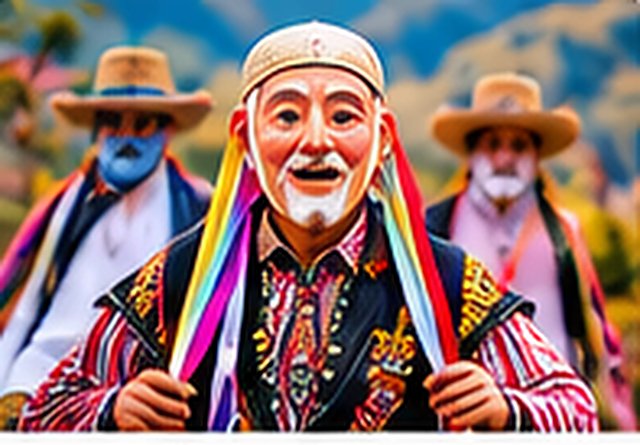
In the Danza de los Viejitos, young men in smiling old-man masks shuffle, cough and lean on canes — then spring into fast, clattering zapateado that makes everyone laugh.
The dance belongs to the Purépecha region of Michoacán, around Lake Pátzcuaro, where the island village of Jarácuaro is especially famous for it. Its deeper origins are uncertain. A popular account says it began as a pre-Hispanic dance of elders for an old god of fire or the sun; another says that after the conquest it became a way to mock the Spanish lords — clumsy, ancient and bent over. Neither story is documented, and the often-repeated link to Huehuetéotl is doubtful: he was the old fire god of central Mexico's Nahua peoples, not a Purépecha deity. What historians can trace is more recent. From the 1920s and 1930s, as the post-revolutionary state turned Lake Pátzcuaro into a showcase of Indigenous culture and a tourist destination, the Viejitos of the lake villages — Jarácuaro above all — were staged at official events, festivals and the Night of the Dead, then taught in schools and danced by folklórico companies across Mexico and abroad; researcher Ruth Hellier-Tinoco traces this story in “Embodying Mexico” (2011). The dancers wear pink-cheeked smiling masks of wood (or cornstalk paste or clay), straw hats hung with colourful ribbons, white cotton clothes, a sarape and wooden-soled sandals that crack on the floor like castanets. They totter in, leaning on their canes, pretend to be exhausted — and then the music speeds up and they explode into vigorous zapateado, only to fall back into old age again. Purépecha communities dance it at their own fiestas, and it has become one of the best-known images of Michoacán.