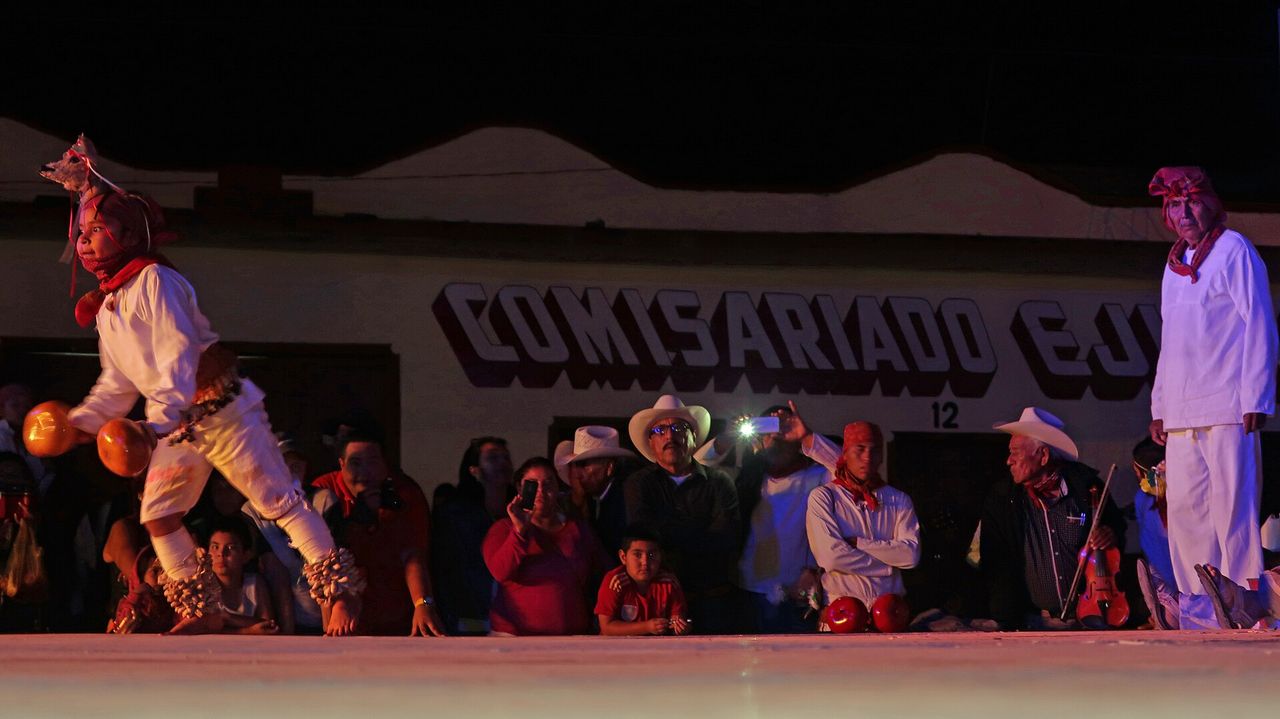
Barefoot, with a real deer head tied on his own, the deer dancer of the Yoeme (Yaqui) and Yoreme (Mayo) peoples moves like a living deer to old songs, a water drum and scraping rasps — a prayer, not a show.
The Deer Dance belongs to the Yoeme, the people known as the Yaqui, who live in eight pueblos along the Río Yaqui in Sonora (and in Arizona), and to their relatives the Yoreme, or Mayo, of southern Sonora and northern Sinaloa. For the Yoeme the deer, maso, is a “little brother” who comes from sea ania, the flower world of the wild; through the dance he is brought into the human world and thanked for giving his life so that the people may live. The deer dancer, maso ye'eme, wears the deer head adorned with red ribbons like flowers, a belt of deer hooves, strings of butterfly-cocoon rattles called tenábaris around his legs and a gourd rattle in each hand. Beside him the deer singers chant the maso bwikam in an old form of the language, keeping time with the water drum — half a gourd floating face-down in a clay pot of water, the deer's heartbeat — and with wooden rasps, the deer's breath. With him dance the pascolas, the “old men of the fiesta”: hosts and ritual clowns in small wooden masks, who joke between the sacred moments to harp and violin, and to a flute and drum played by one man. The dance is offered at fiestas, funerals and above all during Lent and Holy Week, when the Catholic calendar brought by the Jesuits in 1617 and much older Yoeme beliefs meet. The deer dance most people know from the stage — made famous by Amalia Hernández's Ballet Folklórico de México — is a homage; the ritual itself lasts all night, belongs to the community, and photographing it usually requires permission or is forbidden.