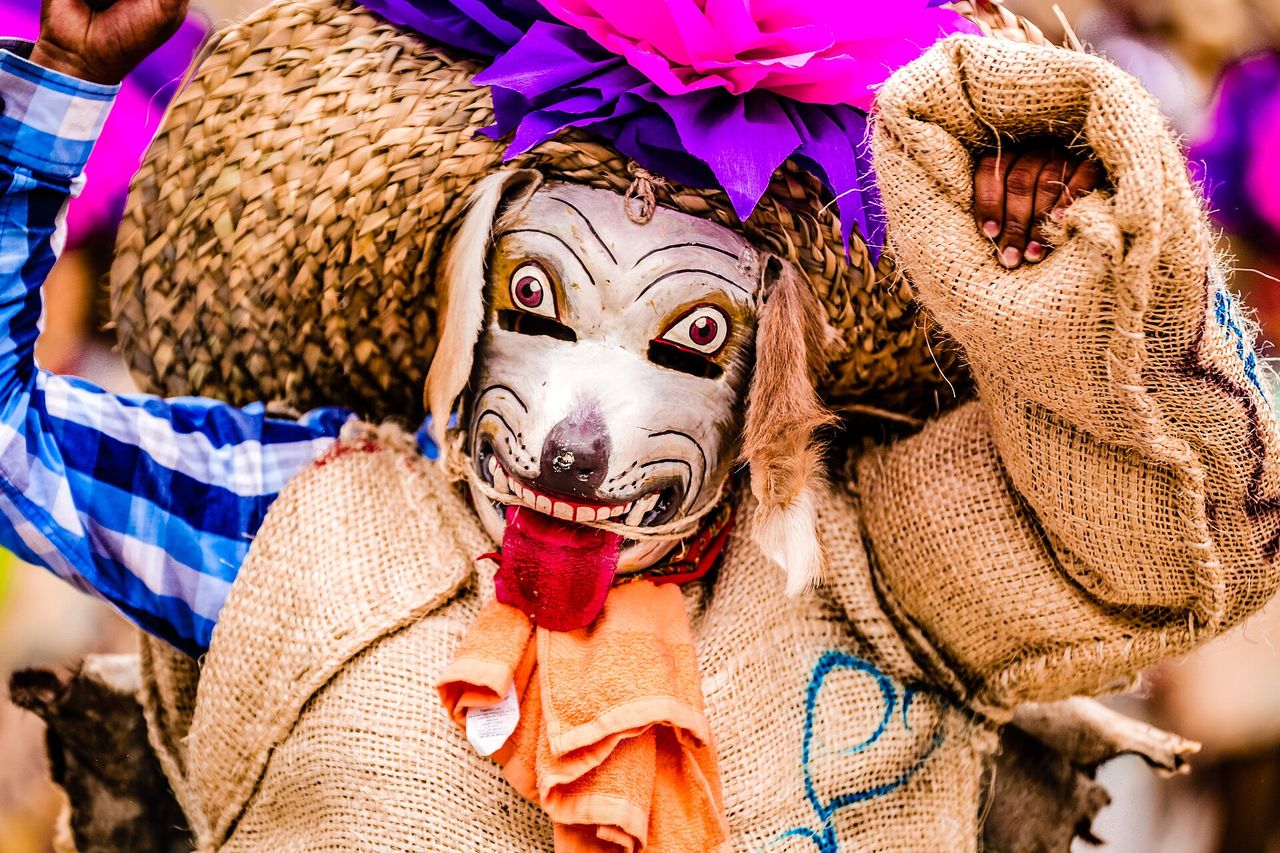
In the Danza de los Tlacololeros, masked hillside farmers hunt the jaguar that ruins their maize, cracking long rope whips over each other's padded arms until the sound echoes like thunder.
A “tlacolol” is a steep hillside plot in Guerrero, cleared and burned to plant maize, beans and squash — and the tlacololeros are the farmers who work it. The dance acts out the farming year: the men clear and sow the land, then discover that a tigre (a jaguar) has been destroying their crops and animals. With the help of the dog Maravilla they track it down and kill it, often to roars of laughter. Each farmer has a name taken from the field — El Maizo, El Chile Verde, El Frijolero, El Tepachero, El Rayo Seco — and the leader is usually called Salvador. Their look is unforgettable: carved wooden masks of colorín or other light woods, with grimacing faces; huge palm hats decorated with marigolds or bandanas; and several burlap sacks (costales) worn as padding, because the dancers crack braided rope whips, the chirriones, against each other's arms. The crack of the chirrión is likened to thunder, and researchers read the whole drama as a plea for rain at the change from the dry to the wet season. In Chilpancingo the dance is accompanied by a pitero (flute player) and a drummer; in villages such as Chilapa, violins have also been recorded. Chilpancingo's barrios field dozens of groups: they march in the Paseo del Pendón, the December parade that opens the San Mateo, Christmas and New Year fair, and meet each June at the Encuentro de Tlacololeros in the barrio of San Antonio. Once danced only by men, since 2015 there has also been a women's group, the Tlacololeras de San Mateo.