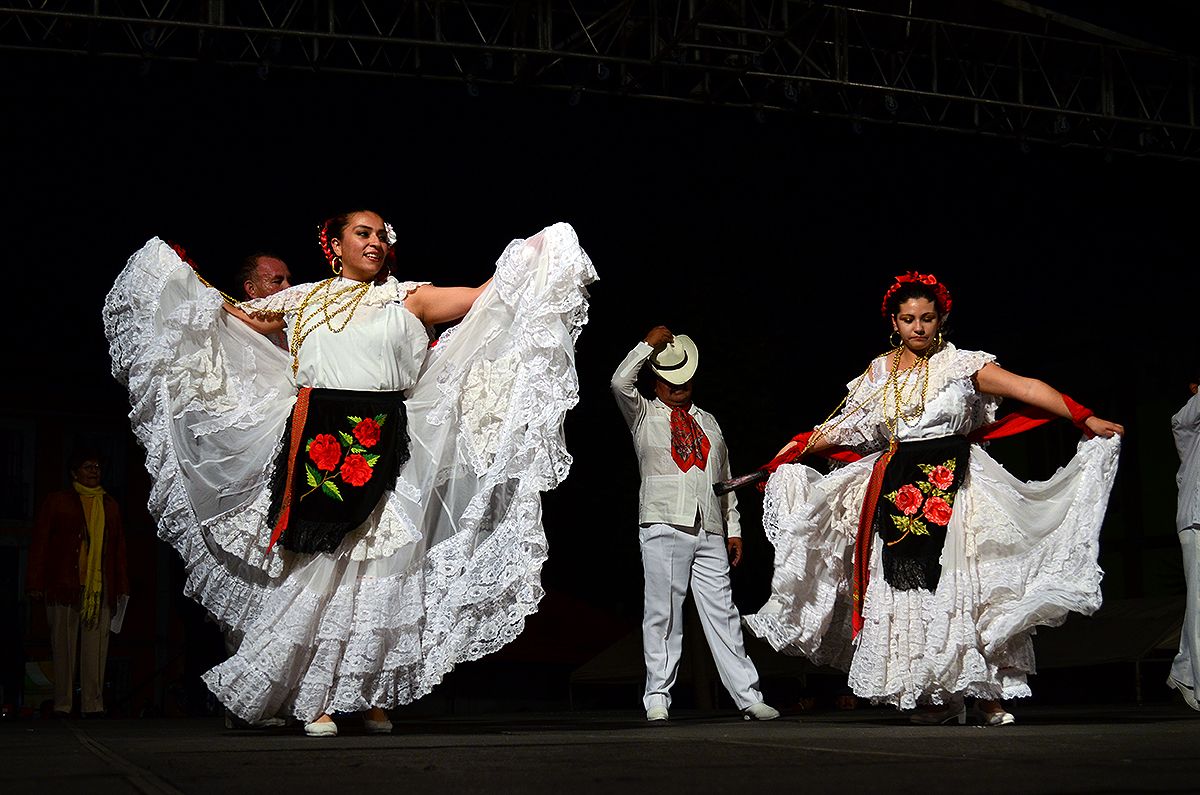
Son jarocho is the music of Veracruz's Sotavento: strummed jaranas, a singing requinto or harp, improvised verses — and dancers whose heels turn a wooden platform, the tarima, into a drum. La Bamba is its most famous son.
Son jarocho grew up in colonial times in the Sotavento — the lowlands of southern Veracruz around the Papaloapan River, reaching into Oaxaca and Tabasco — out of a mix of Spanish, African and Indigenous music; the word “jarocho” itself has an uncertain origin. Its natural home is the fandango, a community fiesta, not a concert: musicians gather around the tarima, anyone with a jarana can join in, singers trade coplas and improvised verses, and dancers take turns on the platform. Some sones are danced by a couple (La Bamba, El Zapateado, El Aguanieve), others “de montón” by several women at once (La Bruja, El Siquisirí, La Culebra), and the zapateado is part of the percussion, so dancers listen as much as they show off. Here it is important to tell two things apart. In a community fandango, La Bamba is simply a couple son danced on the tarima. On the folklórico stage, the same son became a set piece in which a couple ties a long ribbon into a bow using only their feet — an image linked to weddings and now famous worldwide, but a staged choreography, not part of the village fandango. From the 1930s–40s son jarocho was used as a symbol of national culture (Miguel Alemán, a Veracruzano, even used La Bamba in his 1945–46 presidential campaign), and in 1958 Ritchie Valens made La Bamba a rock 'n' roll hit. In 1977 the group Mono Blanco, led by Gilberto Gutiérrez, helped spark the “movimiento jaranero”, which revived the fandango in villages and spread it to Mexico City, the United States and beyond. Every year since 1979, the Encuentro de Jaraneros fills Tlacotalpan during the Candelaria fiesta.