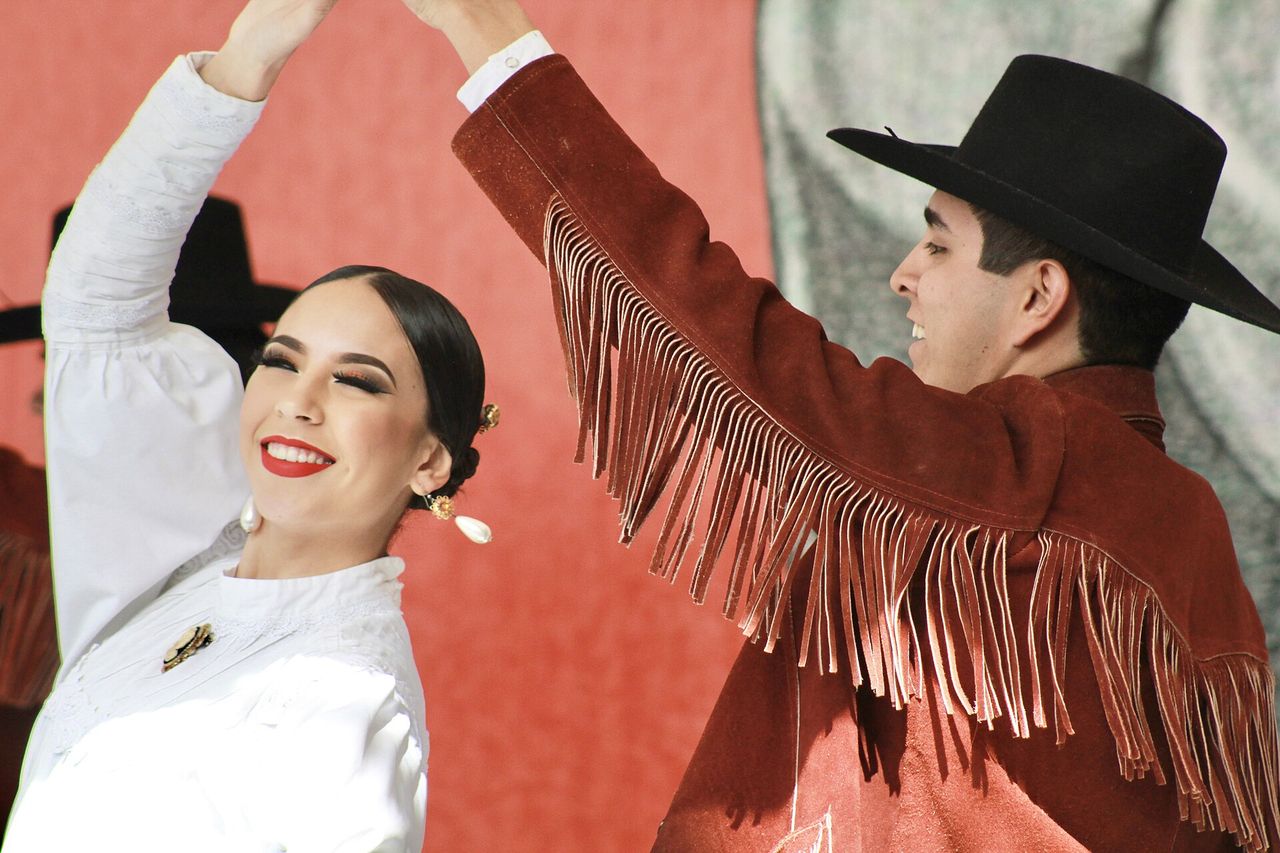
In northern Mexico the European polka became something new: couples spinning and stamping to the accordion and bajo sexto of a conjunto norteño, alongside the redova and the chotís (schottische).
The polka was born in Bohemia (today's Czech Republic) in the 1830s and swept the ballrooms of Europe and the Americas in the following decades; the redowa (redova) and the schottische (chotís) travelled with it. These dances reached Mexico during the 19th century as fashionable salon dances. It is often said that they arrived with the Austrian court and military bands of Emperor Maximilian (1864–1867); that period certainly helped, but the arrival was broader and more gradual — through salons, bands, trade, and German and Central European immigrants on both sides of the Texas–Mexico border. Above all, the button accordion, made cheaply in Germany and sold across the region, was adopted by northern ranch musicians, who paired it with the bajo sexto, a twelve-string bass guitar believed to be of Mexican origin, and later the tololoche (upright bass). That pairing became the conjunto norteño: in Texas, Narciso Martínez — born in Reynosa in 1911 — recorded his first polka in 1935, and from General Terán, Nuevo León, Los Alegres de Terán made their first record in 1948, carrying the sound across Mexico. In the dance, couples hold each other close and travel around the floor with quick hops, heel-and-toe touches, turns and bursts of zapateado; the redova is a lilting waltz-time dance and the chotís a slower, swaying one. Each state has its accent. Nuevo León's style is brisk and showy; Chihuahua is proud of its polka and holds the Polka Monumental every March for its Folklore Day; Coahuila, Durango and Tamaulipas have their own variants. On stage men wear boots and western-style hats and women full skirts; in Tamaulipas, men may wear the cuera tamaulipeca, a fringed, embroidered leather jacket from the town of Tula that is that state's emblem rather than a symbol of the whole north.