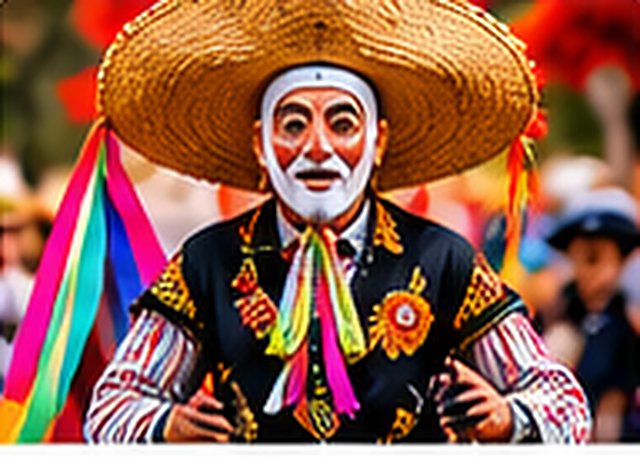
Every January, thousands of Parachicos fill the streets of Chiapa de Corzo in carved wooden masks, ixtle-fibre headdresses and bright shawls, shaking their rattles for the town's patron saints.
According to local legend, in colonial times a wealthy woman, María de Angulo, came to Chiapa de Corzo seeking a cure for her sick son; a healer bathed him in a spring and he recovered. To amuse the boy, townspeople put on masks and danced “para el chico” — for the boy — and in gratitude she gave food to the town during a time of famine. The Parachicos still dance as an offering during the Fiesta Grande de Enero, from 8 to 23 January, honouring the Señor de Esquipulas, San Antonio Abad and San Sebastián. Each dancer wears a smiling, fair-skinned mask carved from wood and lacquered, a tall montera of ixtle fibre like a blond wig, a striped sarape and colourful shawls, and shakes a tin rattle called a chinchín. The patrón — the respected leader of the tradition — guides them with a carrizo flute and guitar, a whip as a symbol of authority, and two drummers; he calls out and the Parachicos answer with shouts. Women dance alongside as chiapanecas in richly embroidered dresses. In 2010 UNESCO inscribed the Parachicos in the traditional January feast of Chiapa de Corzo as Intangible Cultural Heritage of Humanity.