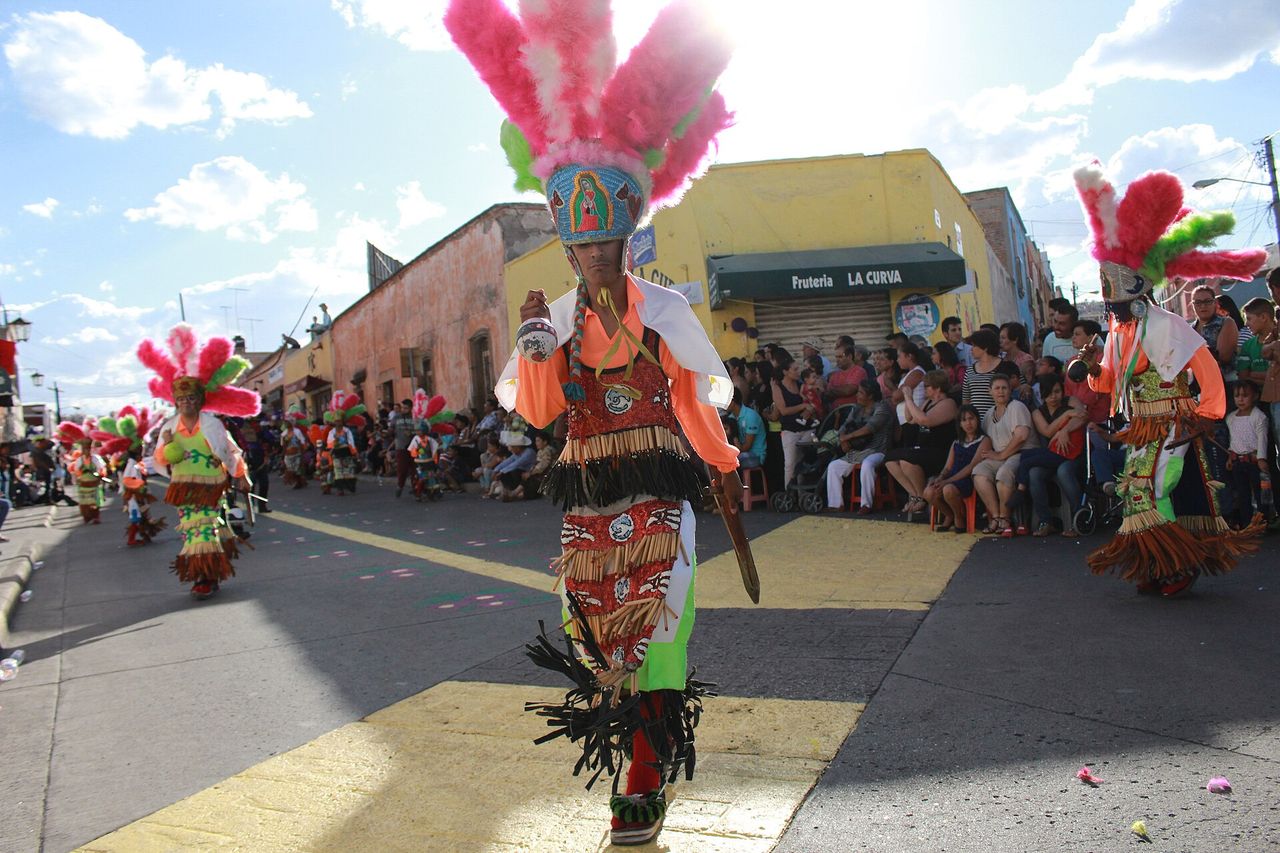
Matachines (or matlachines) are devotional dance groups of northern Mexico and the US Southwest: two rows of dancers with rattles and decorated wands, led by a Monarca, who dance for the Virgin of Guadalupe and other feasts.
In 16th-century Europe, “matachins” were costumed dancers who performed mock sword dances and comic routines; the name is usually linked to the Spanish matachín and the Italian mattaccino, though its exact origin is unclear and other theories exist. Brought to New Spain in colonial times — often by missionaries as a tool of evangelisation — the dance was taken up and transformed by Indigenous peoples until it became their own. In Coahuila the tradition is tied to the Tlaxcalan settlers of San Esteban de la Nueva Tlaxcala, founded beside Saltillo in 1591; there the matlachines dance in lines to the beat of a drum, wearing feathered headdresses and huaraches fitted with metal that ring on every step, and carrying a bow and a rattle. Among the Rarámuri (Tarahumara) of Chihuahua, matachines were already documented in the Jesuit missions in the 18th century — a 1736 letter from Norogachi mentions costumes for matachines — and they still dance through the winter feasts, from 12 December to Christmas Eve, the Epiphany and Candlemas, to violin and guitar, with mirrored crowns, ribbons and coloured cloths. Roles vary: the Monarca leads from inside the rows, holding a rattle and a palma (a trident- or fan-shaped wand); the Rarámuri chapeyó directs from outside with shouts; in New Mexico and other places there are also the Malinche, a young girl in white, the comic Abuelo and the Toro. In New Mexico the dancers' tall headdress is called the cupil. Matachines dance as a promise or offering, often for years, and the biggest day for many groups is the feast of the Virgin of Guadalupe on 12 December. In 2021 Saltillo set a Guinness World Record with 653 matlachín dancers, and Coahuila's state congress has declared the dance part of the state's intangible heritage.