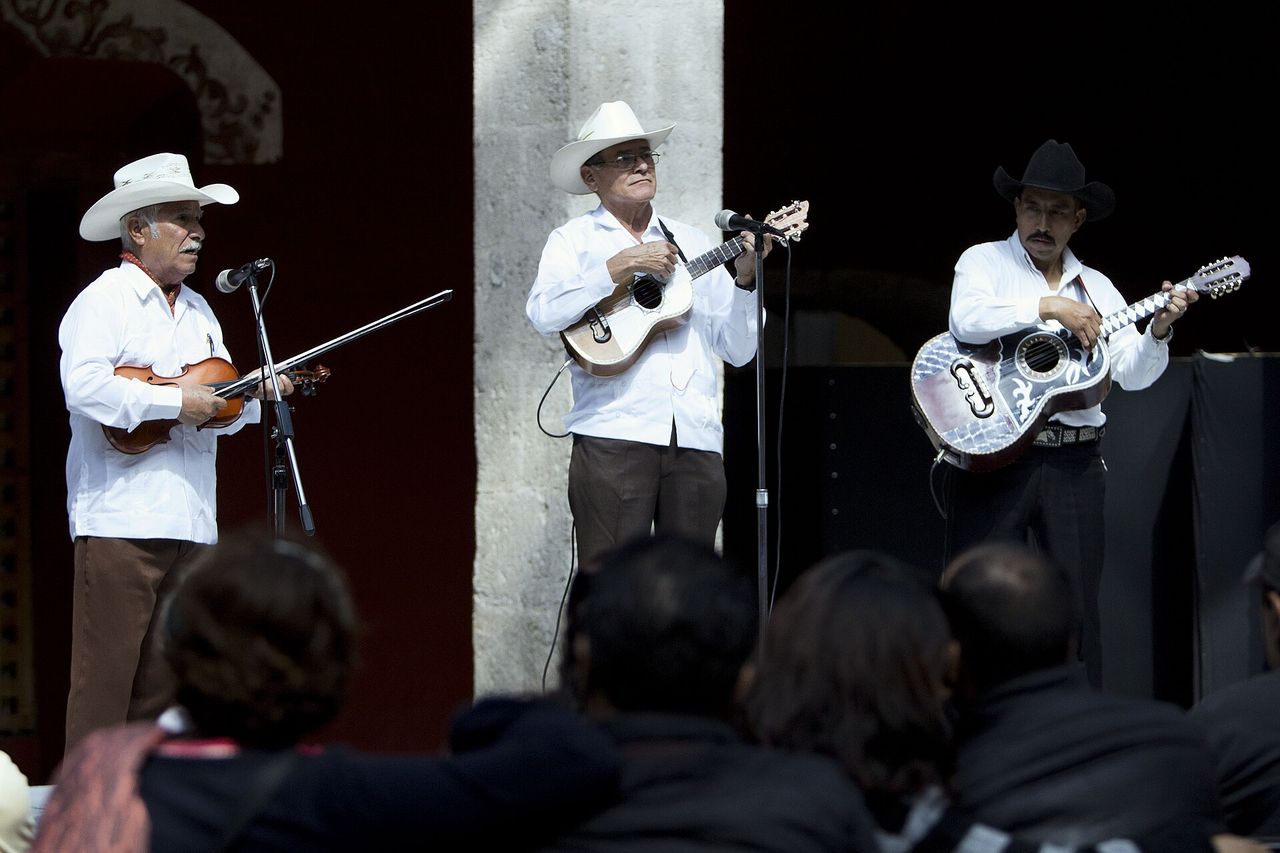
The huapango, or son huasteco, comes from the Huasteca, where a violin, a little jarana and a deep quinta huapanguera accompany singers' soaring falsetto while couples stamp quick zapateado on a wooden platform.
The Huasteca is a cultural region shared by six states — San Luis Potosí, Veracruz, Tamaulipas, Hidalgo, Querétaro and Puebla — home to Teenek, Nahua and mestizo communities. Its son grew from Spanish-derived colonial music played and reshaped over centuries. The name “huapango” is often said to come from Nahuatl words meaning “on the wood”, after the platform it is danced on; this is a popular explanation rather than a settled fact. A trío huasteco has three players: the violin carries the melody with dazzling improvised ornaments, the small five-string jarana huasteca adds bright strumming, and the deep, eight-string quinta huapanguera holds the bass and rhythm. Two singers trade coplas and jump into the falsetto break that makes the style unmistakable. The dancers — usually a man and a woman facing each other — keep their upper bodies calm and let their feet do quick, crisp zapateado, softening while the verses are sung and attacking while the violin plays. Classic sones include El Caimán, El Gusto, La Petenera and El Querreque. A cousin of the huasteco, the huapango arribeño of the Sierra Gorda (Guanajuato, Querétaro, San Luis Potosí), uses two violins, a vihuela and a quinta huapanguera, and is famous for the topada — an all-night duel between two poets improvising décimas while people dance on the tarima. Since 1970 the town of San Joaquín, Querétaro, has hosted the Concurso Nacional de Huapango, where couples of all ages compete each spring.