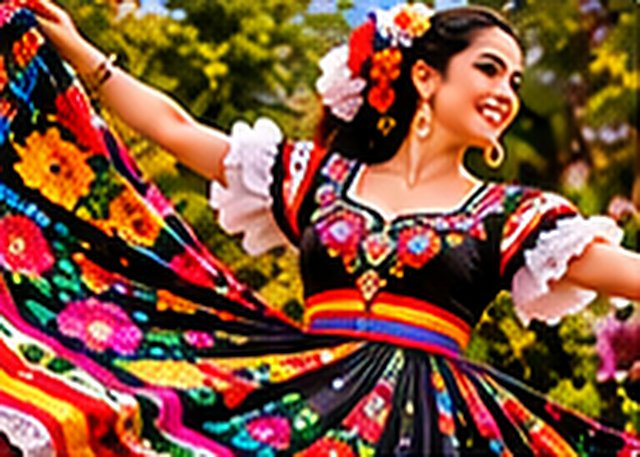
Danza folklórica (ballet folklórico) brings dances from every corner of Mexico to the stage: flying skirts, stamping heels and costumes from Jalisco to Yucatán.
Mexico has hundreds of regional dances, each tied to a village, a saint's day or a style of music. After the Revolution of 1910–1920, teachers and artists travelled the country collecting these dances as a way to build a shared national identity, and schools began teaching them. In 1952 the dancer and choreographer Amalia Hernández founded the company that became the Ballet Folklórico de México; from 1959 it performed weekly at the Palacio de Bellas Artes and toured the world, turning “ballet folklórico” into a style of its own. A typical show travels through the regions: sones and the Jarabe Tapatío from Jalisco, huapangos from the Huasteca, the jarana from Yucatán, Veracruz fandangos and Oaxaca's Guelaguetza dances. Women swirl wide, ribboned skirts like flowers opening; men stamp intricate zapateado rhythms. Today there are folklórico groups in almost every Mexican school and town — and in many Mexican communities abroad.