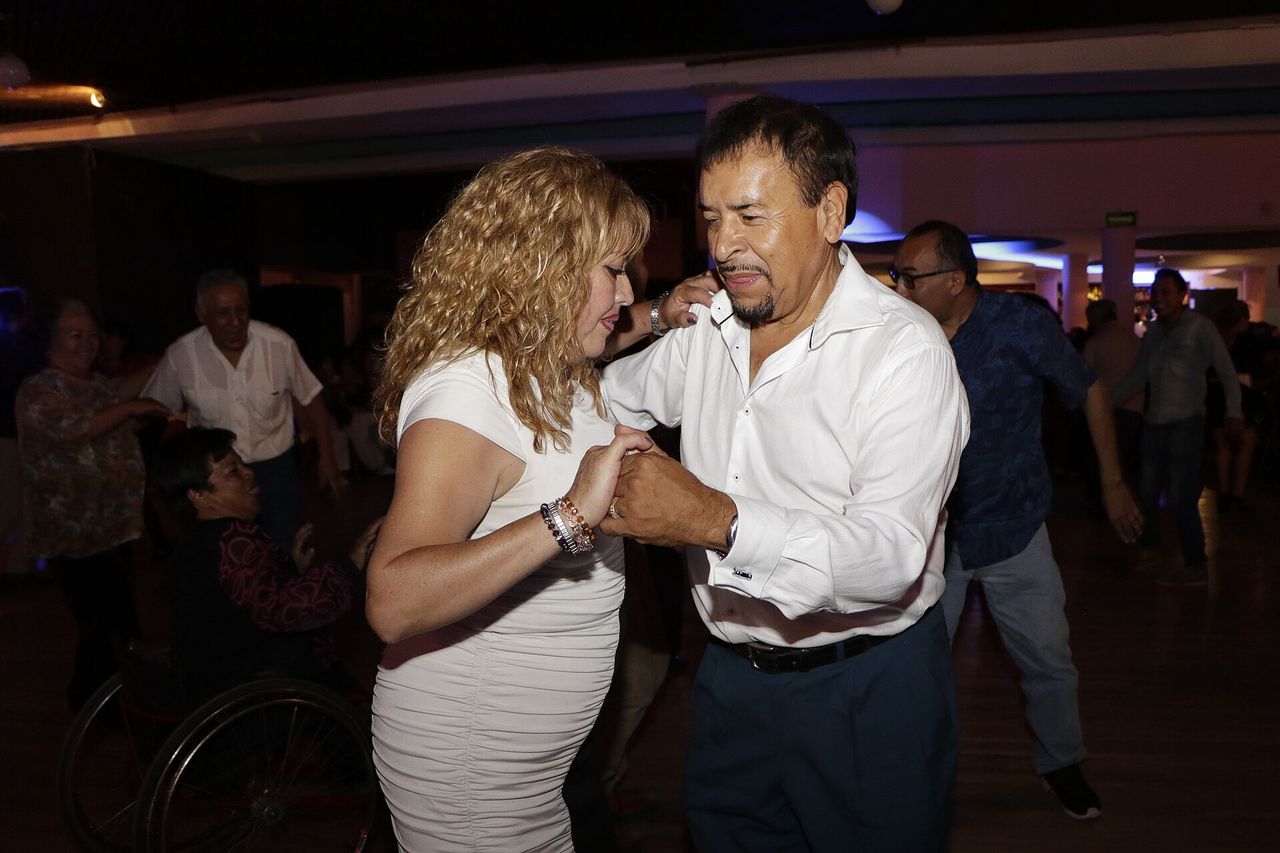
Born in Cuba and adopted by Mexico, danzón is a slow, refined couple dance of pauses and tiny, precise steps — today danced every week in Veracruz's Zócalo and in Mexico City's plazas and ballrooms.
Danzón was born in Cuba: on 1 January 1879 the musician Miguel Faílde presented “Las alturas de Simpson” in Matanzas, a date usually taken as its birth, although it grew out of earlier Cuban forms of the contradanza. Within a few years it reached Mexico through the ports of Yucatán and Veracruz, and it took root most deeply in Veracruz, where it became part of daily life. Cuban musicians also came — the timbalero Consejo Valiente “Acerina”, for example, arrived in Veracruz in 1913 and became a legend of Mexican danzón. In Mexico City the dance found its temples: the Salón México (opened in 1920, closed in 1962), which inspired Aaron Copland's orchestral piece “El Salón México”, and the Salón Los Ángeles, opened in 1937 and still dancing. In 1932 Amador Pérez “Dimas” composed “Nereidas”, a danzón that marked a distinctly Mexican style. A danzón is built in sections: the opening theme returns between the others, and during these “paseos” couples traditionally stop, stroll or greet one another, then resume dancing when the melody changes. The man leads with discreet, precise signals; the steps are small — good dancers are said to dance “en un ladrillo”, on a single floor tile — and the elegance lies in posture, timing and the pauses. Tradition adds touches like the man's handkerchief and the woman's fan. María Novaro's 1991 film “Danzón”, starring María Rojo as a Mexico City telephone operator who searches for her dance partner in Veracruz, brought new dancers to the plazas. Since 1996 couples have gathered every Saturday in Mexico City's Plaza de la Ciudadela, and in November 2025 Mexico City declared danzón part of its intangible cultural heritage.