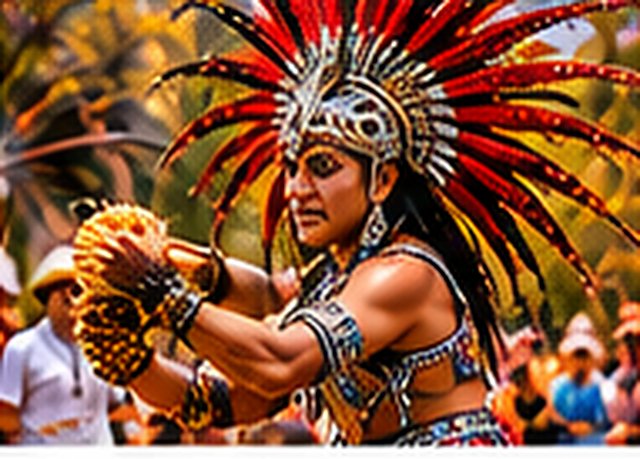
The Concheros are devotional dance groups that blend Indigenous ritual and Catholic faith, dancing for the Holy Cross and the Virgin to the strum of the concha, a lute made from an armadillo shell.
The Conchero tradition arose soon after the conquest, when Otomí and Chichimeca peoples of the Bajío adapted their old circle dances to Catholic worship. Its founding story is set on the hill of Sangremal in Querétaro in 1531: during a battle between Spaniards and Chichimecas, a shining cross is said to have appeared in the sky, and the fighters began to dance. Concheros are organised like an army of faith — mesas (dance groups) led by capitanes and generales — and they open every dance with the cry “¡Él es Dios!” (“He is God!”). Their signature instrument is the concha, a small guitar-like lute whose body is an armadillo shell; they also hold all-night vigils (velaciones) with alabanzas, hymns of praise. Concheros and Mexica dancers look alike — feathers, ankle rattles, circles, copal smoke — but they are different: Concheros keep the concha, the saints, church visits and pilgrimages, while Mexica dancers, part of the 20th-century Mexicanidad movement, drop the Catholic elements to recover a purely pre-Hispanic identity. The great Conchero gatherings are Querétaro's Santa Cruz fiesta in September and the pilgrimage to the Basilica of Guadalupe on 12 December.