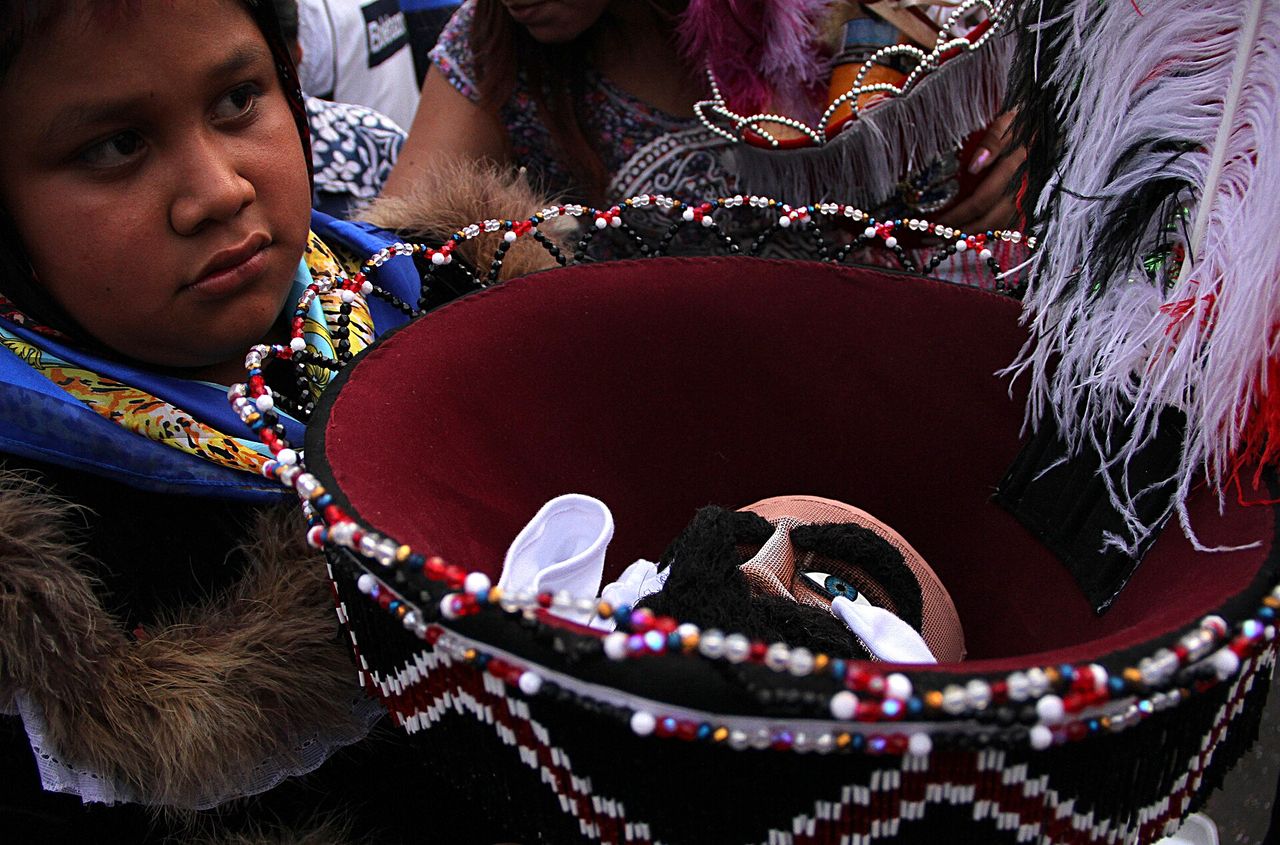
At carnival time in Morelos, hundreds of Chinelos in long velvet robes, towering hats and bearded masks jump through the streets behind a brass band — the famous “brinco del chinelo”.
The Chinelo is the emblem of Morelos, and Tlayacapan calls itself its cradle. The story most often told — by townspeople, the federal Secretaría de Cultura and tourism boards — is that Indigenous and mestizo villagers, kept out of the carnival parties of the Spanish hacienda owners, disguised themselves in old clothes and masks and paraded through the streets mocking their masters' beards, pale skin and stiff manners. The dates in these accounts differ (1807, about 1870, or earlier masked “huehuenche” characters from the colonial era), so the origin is best read as tradition rather than documented fact; historians do agree that the costume took its present shape between the mid-1800s and the early 1900s, when Morelos was a land of rich sugar haciendas and poor workers. The name is often said to come from a Nahuatl word meaning “disguised”, though this too is uncertain. A Chinelo wears a long robe, usually of velvet; gloves; a mesh mask with an upturned pointed beard; and a huge hat crowned with feathers. Each town has its style: Tlayacapan keeps the simplest, closest to the old one — a white or blue tunic and a cape with the Virgin of Guadalupe; Tepoztlán favours black velvet with painted images; Yautepec covers velvet with beads and sequins. Neighbourhood groups called comparsas, such as La América, La Azteca and La Unión in Tlayacapan, dance for hours behind brass bands like the Banda de Tlayacapan, said to have been founded around 1870. In 2017 the Morelos Congress declared the state's carnivals cultural heritage of Morelos.