
History
Mwazindika (Dawida)
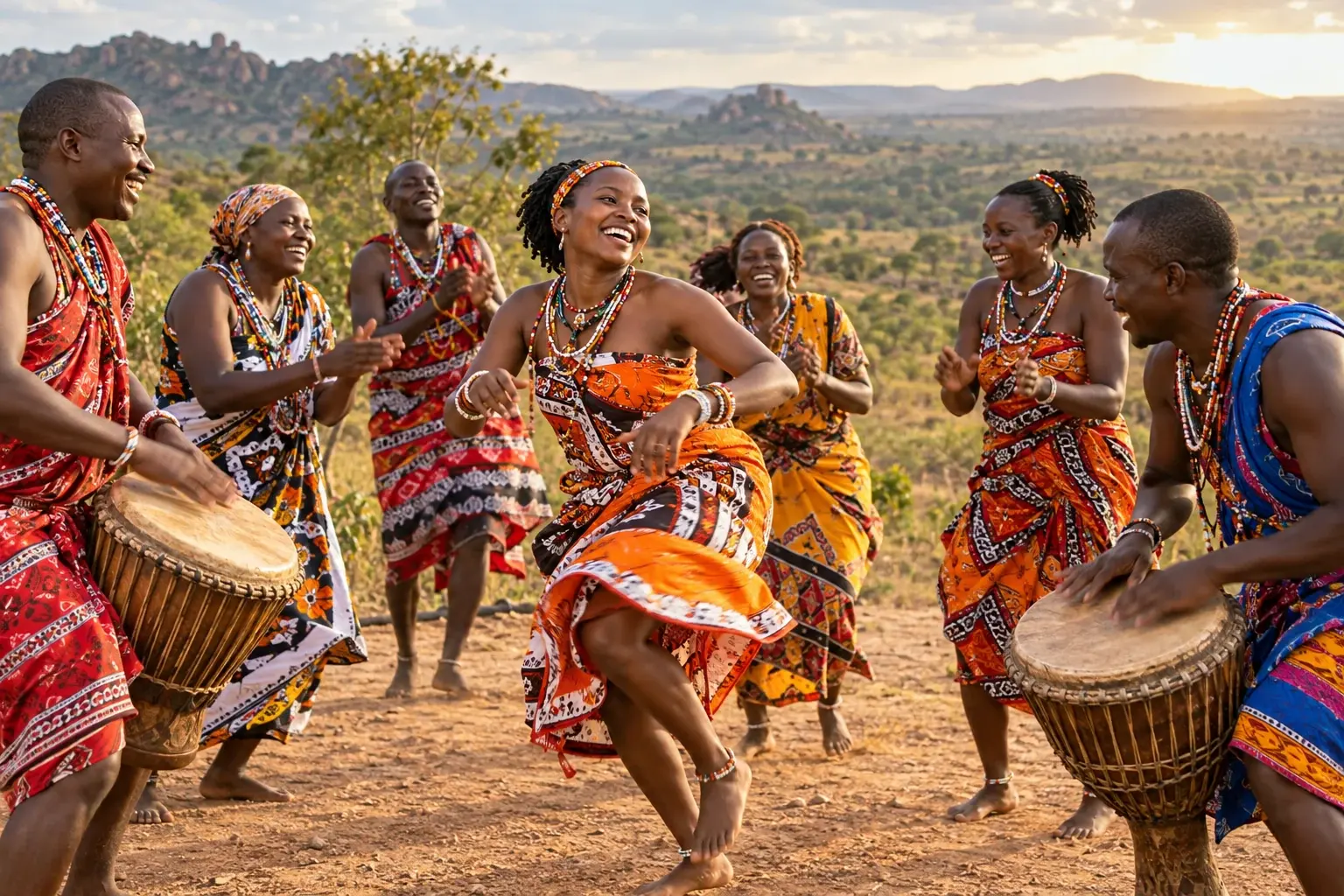
The Dawida community’s spiritual dance, inscribed by UNESCO in 2025 for urgent safeguarding.
The Dawida community’s spiritual dance, inscribed by UNESCO in 2025 for urgent safeguarding. Community custodians connect it with healing, memory and balance; its sacred elements must not be reproduced as public dance lessons.
Why it matters
Mwazindika (Dawida) is associated with Dawida · Taita-Taveta. Descriptions of dance must distinguish a living community practice from a theatrical adaptation. Listen to local performers and teachers: who is invited, who leads the music and what event makes this performance meaningful? This is sacred heritage, not a dance to reenact without community authorization. Learning begins by naming the community and region correctly and asking permission when context requires it. A public video is evidence of one performance, not a license to imitate private ritual, reproduce costumes inaccurately or claim one pattern represents everyone. School and festival directories can help visitors connect with Kenyan practitioners.
Key facts
- Type: Ceremonial tradition
- Region: Taita–Taveta
- Community: Dawida
- Music: Drums & voices
- Formation: Ensemble / group
- Context: Protocol-led ceremonies
History timeline
- Heritage — The Dawida community’s spiritual dance, inscribed by UNESCO in 2025 for urgent safeguarding.
- Practice — Mwazindika (Dawida) is associated with Dawida · Taita-Taveta.
- Today — Learning begins by naming the community and region correctly and asking permission when context requires it.
- 2025 — UNESCO listed Mwazindika for urgent safeguarding.
Did you know?
- Rather than demonstrate steps, watch UNESCO’s documentary explanation of five iconic drums and the community’s own cultural interpretations. Participation requires explicit community permission.
- Learning begins by naming the community and region correctly and asking permission when context requires it.
Performances to watch
- Mwazindika (Dawida)
- Find public performance
- Explore community & music
- Explore cultural context
Related dances
Why this dance?
How it's danced
Schools
Promote
Promote your classes on this page
Dancers