
History
Kenyan Hip-Hop Street Dance
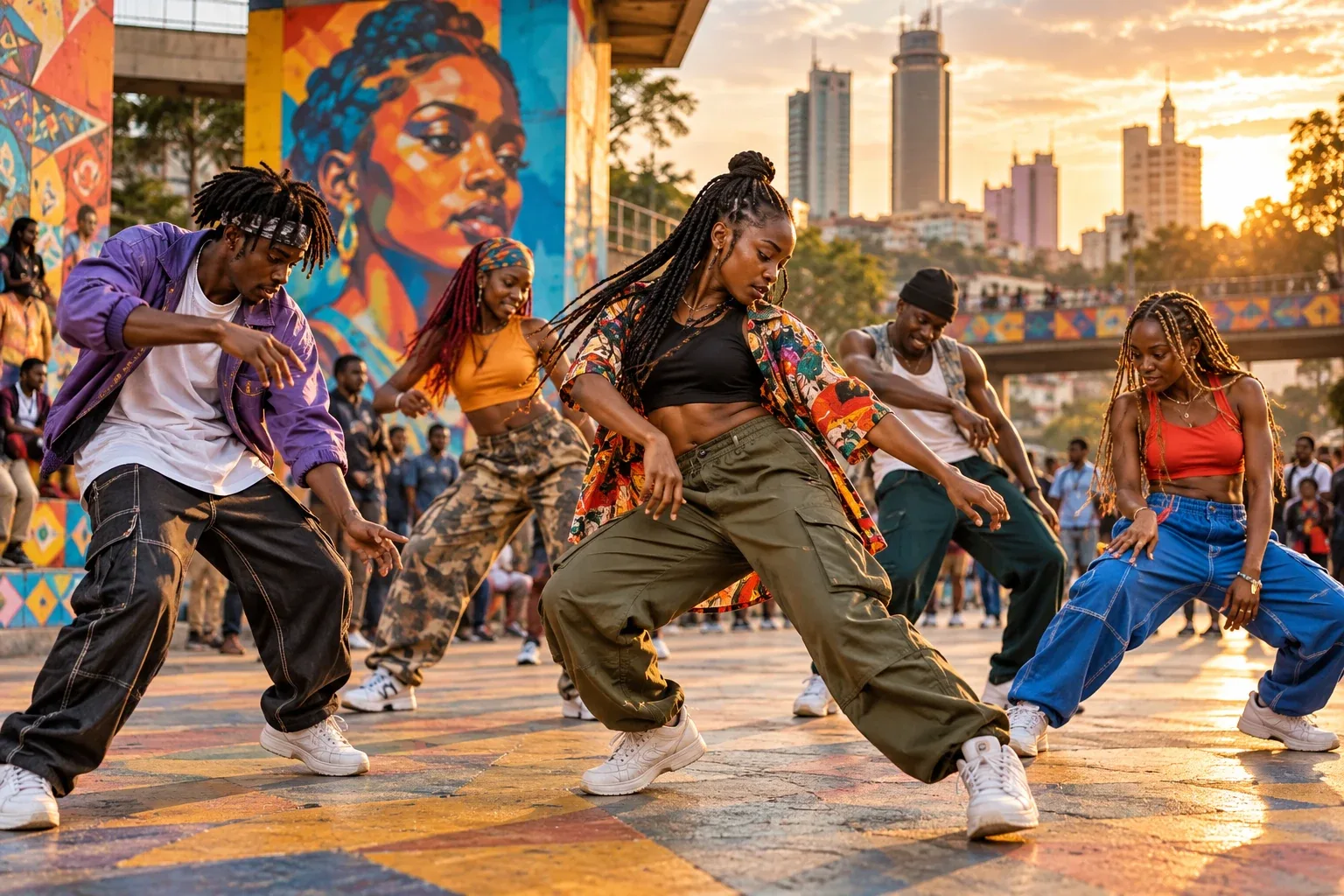
Kenyan crews develop breaking, freestyle and hip-hop vocabularies in neighborhoods, studios and online spaces.
Kenyan crews develop breaking, freestyle and hip-hop vocabularies in neighborhoods, studios and online spaces. This is a contemporary transnational culture localized through Kenyan music and stories.
Why it matters
Kenyan Hip-Hop Street Dance is associated with Nairobi · Mombasa · national urban scenes. Descriptions of dance must distinguish a living community practice from a theatrical adaptation. Listen to local performers and teachers: who is invited, who leads the music and what event makes this performance meaningful? Public festivals may show one variation; other social or family settings can look different. Learning begins by naming the community and region correctly and asking permission when context requires it. A public video is evidence of one performance, not a license to imitate private ritual, reproduce costumes inaccurately or claim one pattern represents everyone. School and festival directories can help visitors connect with Kenyan practitioners.
Key facts
- Type: Contemporary urban
- Region: Nairobi and urban centres
- Community: Urban Kenyan crews
- Music: Contemporary beats
- Formation: Varied formations
- Context: Studios / public spaces
History timeline
- Heritage — Kenyan crews develop breaking, freestyle and hip-hop vocabularies in neighborhoods, studios and online spaces.
- Practice — Kenyan Hip-Hop Street Dance is associated with Nairobi · Mombasa · national urban scenes.
- Today — Learning begins by naming the community and region correctly and asking permission when context requires it.
Did you know?
- Dancers take turns inside a freestyle circle, alternating sharp footwork, isolations and musical accents in response to one another.
- Learning begins by naming the community and region correctly and asking permission when context requires it.
Performances to watch
- Find public performance
- Explore community & music
- Explore cultural context
Related dances
Why this dance?
How it's danced
Schools
Promote
Promote your classes on this page
Dancers