
History
Adumu (Maasai)
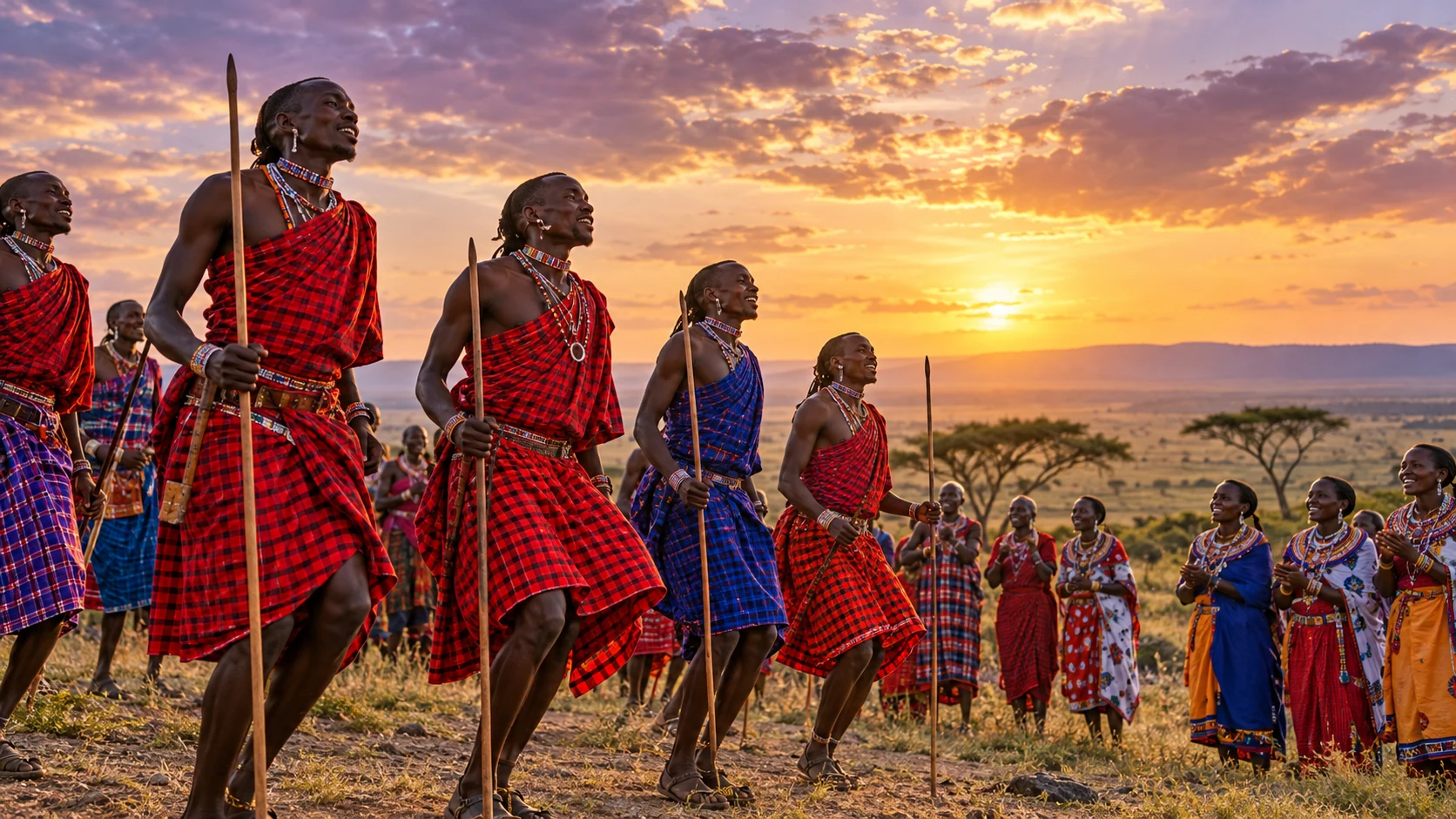
Often photographed as the Maasai jumping dance, Adumu belongs to particular Maa-speaking cultural and age-set contexts.
Often photographed as the Maasai jumping dance, Adumu belongs to particular Maa-speaking cultural and age-set contexts. The circle, chanting and upright jumping carry local meanings beyond tourism.
Why it matters
Adumu (Maasai) is associated with Maasai communities · Southern Rift Valley. Descriptions of dance must distinguish a living community practice from a theatrical adaptation. Listen to local performers and teachers: who is invited, who leads the music and what event makes this performance meaningful? Public festivals may show one variation; other social or family settings can look different. Learning begins by naming the community and region correctly and asking permission when context requires it. A public video is evidence of one performance, not a license to imitate private ritual, reproduce costumes inaccurately or claim one pattern represents everyone. School and festival directories can help visitors connect with Kenyan practitioners.
Key facts
- Type: Community heritage
- Region: Southern Rift Valley
- Community: Maasai
- Music: Group singing
- Formation: Circle / ensemble
- Context: Culturally specific
History timeline
- Heritage — Often photographed as the Maasai jumping dance, Adumu belongs to particular Maa-speaking cultural and age-set contexts.
- Practice — Adumu (Maasai) is associated with Maasai communities · Southern Rift Valley.
- Today — Learning begins by naming the community and region correctly and asking permission when context requires it.
Did you know?
- In a public demonstration, a dancer may rise in repeated upright vertical jumps while peers sing and sustain a circular formation. Do not confuse staged tourism demonstrations with private ceremonies.
- Learning begins by naming the community and region correctly and asking permission when context requires it.
Performances to watch
- Adumu (Maasai)
- Find public performance
- Explore community & music
- Explore cultural context
Related dances
Why this dance?
How it's danced
Schools
Promote
Promote your classes on this page
Dancers