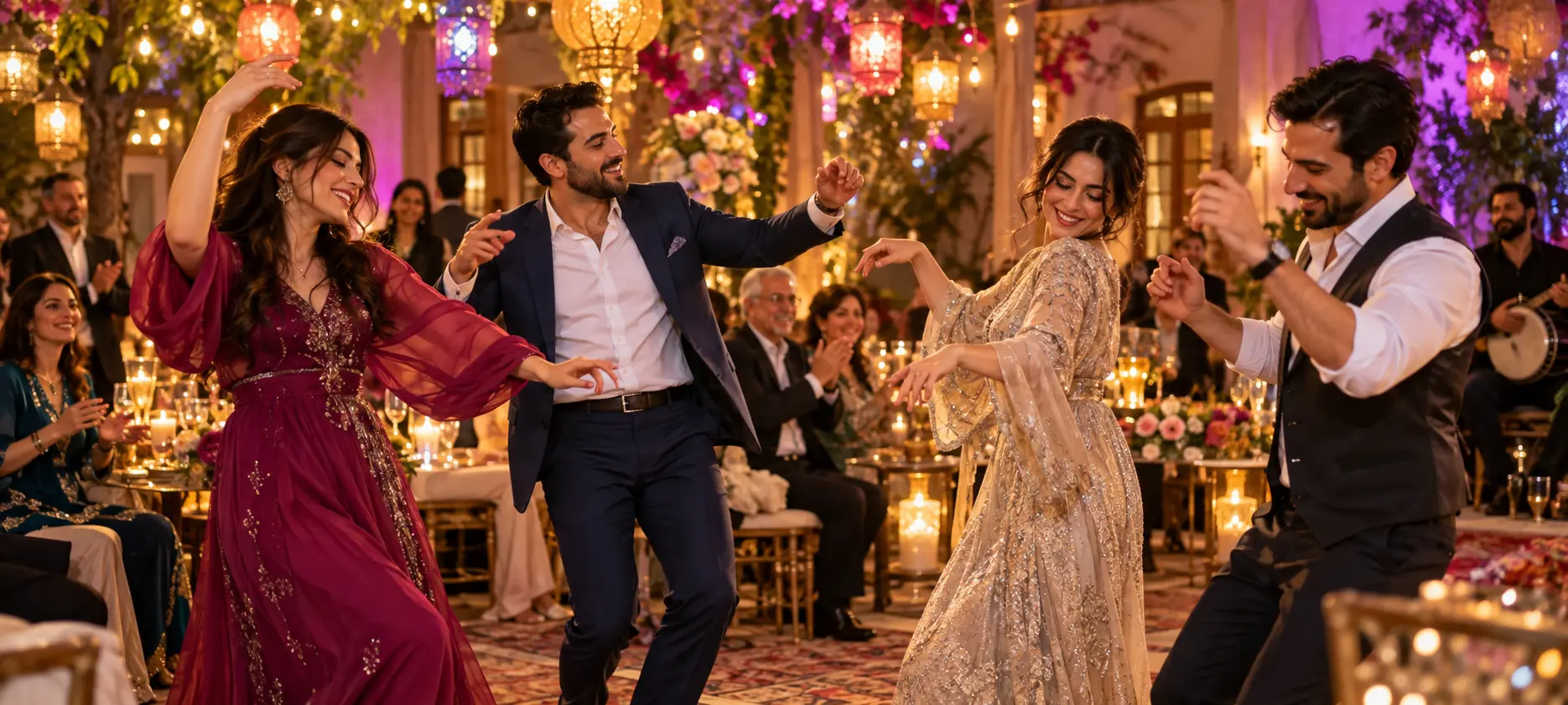
The social setting matters: celebratory gatherings and intergenerational learning keep the vocabulary alive. It should not be confused with a single standardized national choreography.
A social dance floor is a space for dialogue and improvisation, not a fixed national step sequence. Raqs-e mehmooni lives less in an archive than in the improvised exchanges of home celebrations. Guests take turns, respond to a singer or rhythmic recording, invite one another into the open space and make small gestures feel personal. Its gestures can travel among generations and between cities without becoming one standardized national choreography. The terms raqs-e Tehrani and raqs-e mehmooni may overlap but are not perfect synonyms in every family. Regional accents, gendered social spaces, migration and popular music reshape what can be seen or recorded. For the atlas, the room and the relationships are part of the history, not merely a backdrop to the dancing body.