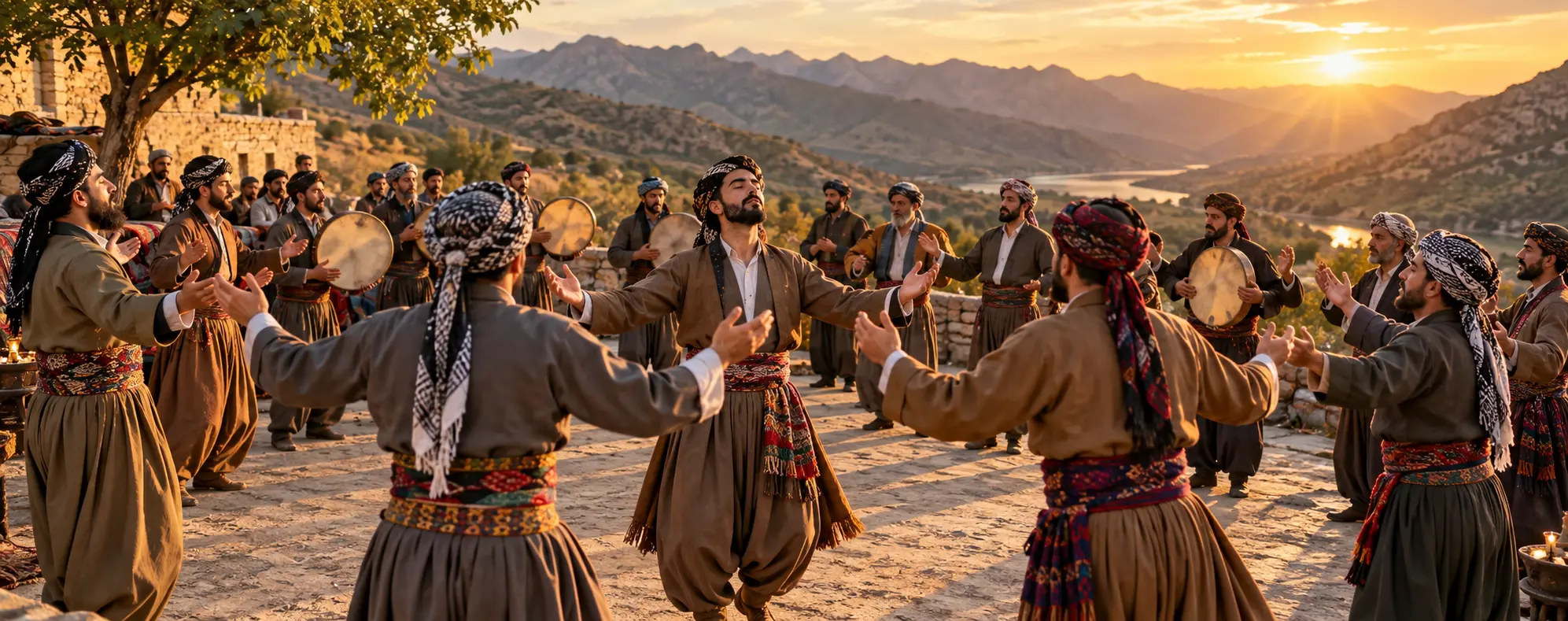
For practitioners, samāʿ is devotion rather than performance for spectators. Permission, setting and terminology matter when filming or interpreting a ceremony.
Iranian samāʿ is not synonymous with the staged Mevlevi whirling image from Konya. Samāʿ originally centres on spiritual listening. Across Sufi histories, recitation, music, poetry, swaying and turning take different forms and meanings. The whirling ceremony known internationally from the Mevlevi order in Konya should not be substituted for all Iranian Sufi gatherings; regional orders have their own traditions and rules of attendance. Poetry about turning and ecstasy is meaningful cultural testimony but not a step-by-step technical score. Some ceremonies are intimate religious practices, not performances for visitors. Filming or using their imagery requires specific permission, and the theological interpretations belong first to the communities who practice them.