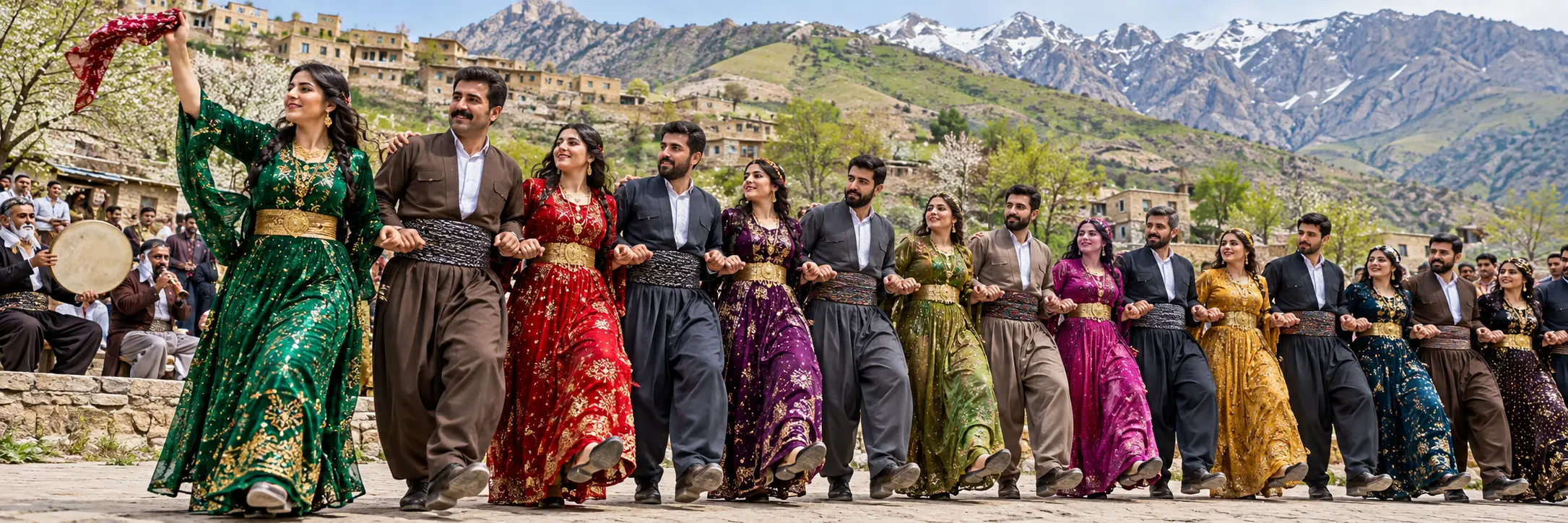
Halperke is a lived practice of celebration and belonging, not merely a stage spectacle. Kurdish traditions are shared across several modern states.
Names, tempo and leader-led movement vary by Kurdish area; no one recording can represent all Halperke. Halperke is not one dance but a family of linked dances among Kurdish communities, including those in western and northwestern Iran. People form lines or arcs, coordinate weight and footwork, and sometimes follow a leader holding a scarf or handkerchief. Regional and local names matter: a single YouTube video cannot define the entire repertoire. A linked line is a social agreement: dancers attend to the neighbour’s timing as well as their own. Celebrations and community festivals can give this form public expression, but religious ceremonies and mourning practices have other rules. To preserve Halperke is to listen to musicians, dancers and the spoken Kurdish varieties that name each form.