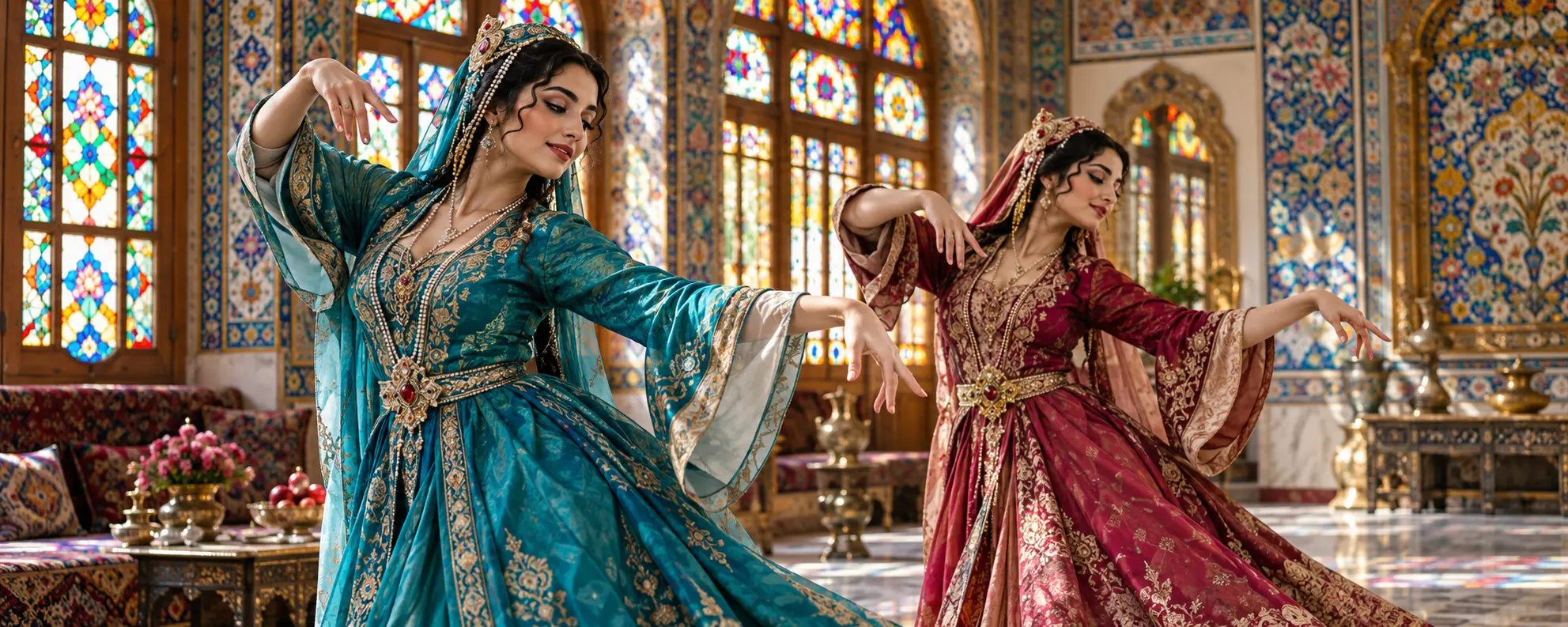
Accounts and painted figures from Safavid and Qajar Iran offer traces of courtly dancing, while contemporary teachers articulate a recognizable movement vocabulary. The label “classical” is debated by scholars.
Modern Persian classical dance is a studied artistic vocabulary, not a surviving complete Safavid choreography. The phrase “classical Persian dance” describes a modern field of teaching and performance rather than a surviving, unbroken set of steps from ancient Persia. Safavid miniatures, Qajar portraits, European travel accounts and later film illuminate different kinds of professional and social dancing. None supplies a complete manual that would allow one court choreography to be reconstructed without interpretation. Contemporary artists use sculptural arm lines, rotating wrists, expressive head and eyes, improvisation and the playful social language called naz. These skills create a distinctive stage art. Respect for its beauty grows when teachers name their own lineage and distinguish modern pedagogy from historical evidence.