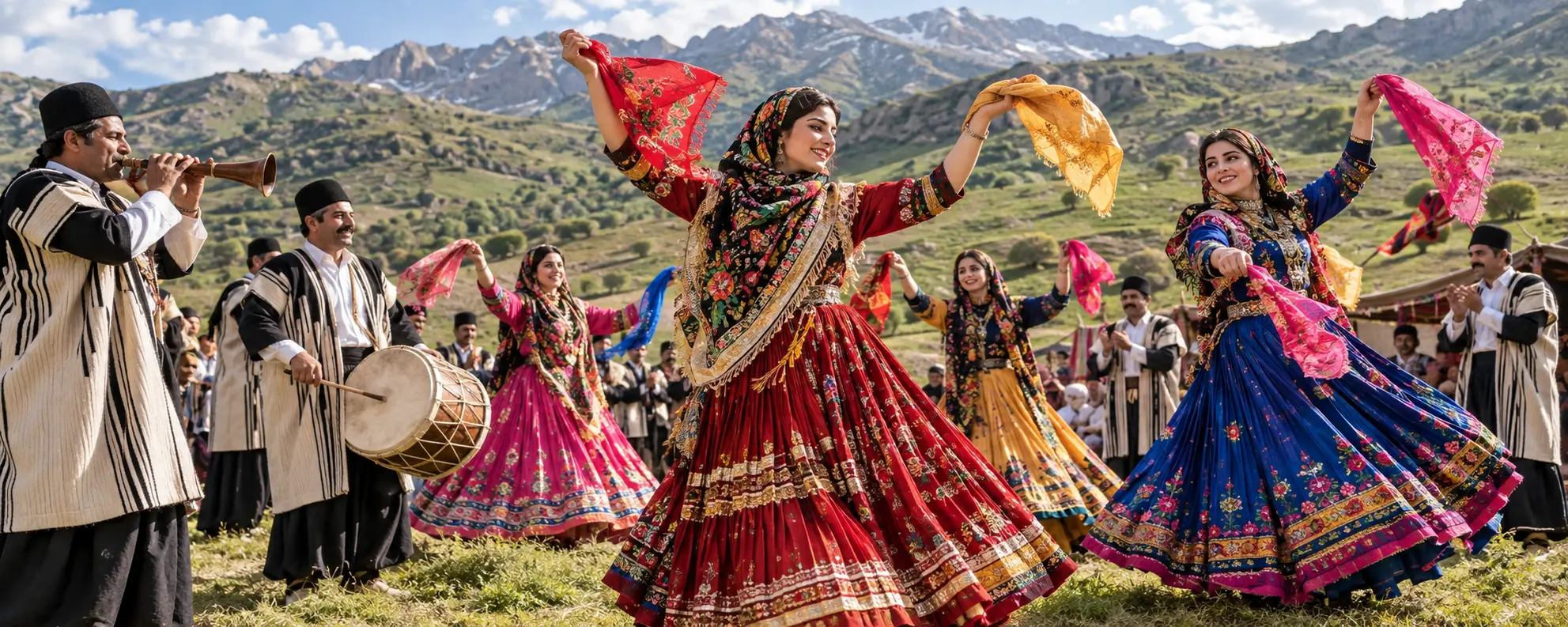
Wedding celebrations, community pride and transmission between generations give the dance its meaning. Clothing and scarf symbolism should be explained locally rather than assigned a single invented interpretation.
The two handkerchiefs, group formation and sound of karnā carry a specifically Bakhtiari wedding atmosphere. Bakhtiari dance belongs to communities whose histories connect the mountains, seasonal movement, pastoral life and urban migration of southwestern Iran. Wedding dance lines may feature handkerchiefs, shifts from weighty to brisk rhythms and a musical conversation between sorna and dohol. A familiar stage label should not hide the variations among families and localities. The cloth is not a universal national costume accessory: dancers use gestures, formation and dress appropriate to an occasion. Women and men may occupy different positions according to community custom, time and event. Attribution requires more than borrowing colourful Bakhtiari fabric for a generic “Persian folklore” photograph.