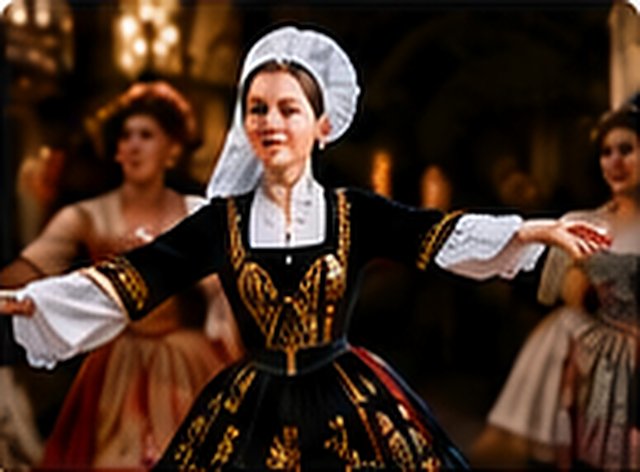
In Brittany the gavotte is the queen of the fest-noz: long chains of dancers, little fingers linked, stepping and hopping as one to the bombarde or to sung kan ha diskan. At Louis XIV's court, the gavotte was a graceful dance that Lully, Rameau and Bach put into their suites.
The name 'gavotte' is thought to come from the Gavots, the mountain people of the Pays de Gap in the Alps, and it was used for several French folk dances. In 1589 Thoinot Arbeau described a gavotte as a medley of branles with little leaps. At the court of Louis XIV it became a refined couple dance in moderate double time, starting on a half-bar upbeat, and composers from Lully and Rameau to Bach wrote gavottes for the stage and for instrumental suites — Bach's Gavotte en rondeau for solo violin is one of the best known. In Lower Brittany, meanwhile, the gavotte remained the great popular dance. It is danced in long open chains or circles, dancers linked by the little finger or arm in arm, with an eight-beat step that each 'pays' does in its own style: the Gavotte des Montagnes of central Brittany is danced as a three-part suite, the Pays Bigouden gavotte is fast and spectacular, and the Vannetais has its own cousins, the an dro and hanter dro. It is sung in kan ha diskan, two singers relaying each other, or played on bombarde and biniou. Revived in the 1950s with the modern fest-noz — on UNESCO's list since 2012 — the gavotte is now danced by tens of thousands of people and polished by cercles celtiques at the Festival de Cornouaille and the Festival Interceltique de Lorient.