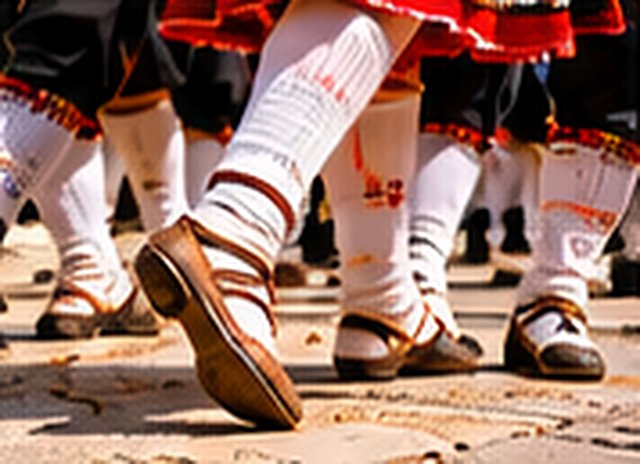
Nijemo Kolo, the silent circle dance of the Dalmatian hinterland, is one of Croatia’s best documented dance traditions. UNESCO inscribed it on the Representative List of the Intangible Cultural Heritage of Humanity in 2011. It developed in communities of inland Dalmatia and has traditionally been associated with weddings, fairs, feast days and other social gatherings. Village differences are an important part of its identity.
Nijemo Kolo, the silent circle dance of the Dalmatian hinterland, is one of Croatia’s best documented dance traditions. UNESCO inscribed it on the Representative List of the Intangible Cultural Heritage of Humanity in 2011. It developed in communities of inland Dalmatia and has traditionally been associated with weddings, fairs, feast days and other social gatherings. Village differences are an important part of its identity. Its defining feature is the absence of music during the dance itself. Dancers create rhythm through their movement, contact with the ground and interaction with partners. Figures can be energetic and improvised, with changing patterns and demanding steps. UNESCO notes that songs or instrumental performances may occur before or after the dance, but not as accompaniment to Nijemo Kolo itself. Historically the dance also offered opportunities for young people to meet and assess one another’s dancing skills. Today local groups and cultural associations help transmit it, sometimes adapting spontaneous village variations into more fixed stage forms. DANZO recommends comparing UNESCO documentation with performances by local tradition bearers to understand both continuity and change.