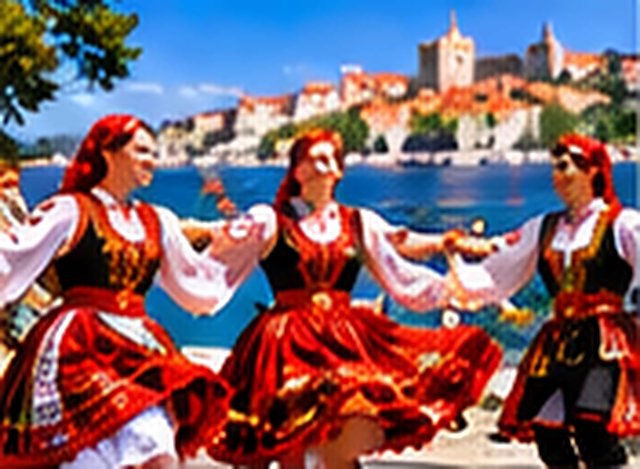
Linđo is associated with Dubrovnik and the surrounding southern Dalmatian communities. It belongs to the tradition of the poskočica, a spirited social dance involving couples and circular formations. Research collected by the Linđo Museum shows that the modern name became widespread in the late nineteenth century, linked to the nickname of the respected lijerica player Nikola Lale. The history is therefore more specific than a vague claim that the dance is simply “ancient.”
Linđo is associated with Dubrovnik and the surrounding southern Dalmatian communities. It belongs to the tradition of the poskočica, a spirited social dance involving couples and circular formations. Research collected by the Linđo Museum shows that the modern name became widespread in the late nineteenth century, linked to the nickname of the respected lijerica player Nikola Lale. The history is therefore more specific than a vague claim that the dance is simply “ancient.” The lijerica is a small bowed instrument with three strings. Its bright, insistent sound supports quick footwork, turning and lively exchanges between partners. A leader may call figures and direct the flow, creating a combination of structure and responsiveness. Regional costumes contribute to the visual identity, but the core of Linđo lies in its relationship between music, social interaction and movement. Today Linđo is taught and performed by folklore ensembles, including the ensemble of the same name in Dubrovnik. The stage presentation is a way of transmitting heritage, although it may differ from the spontaneous social occasions of earlier generations. To understand the dance, explore recordings, the Linđo Museum’s historical material and the villages connected to the tradition.