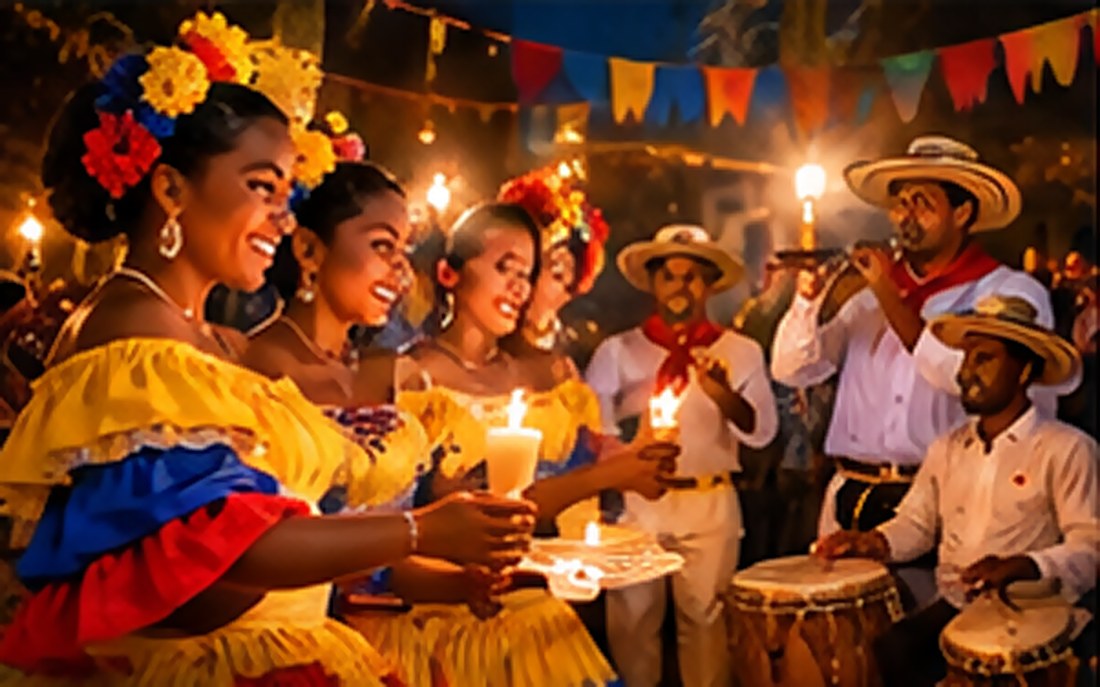
Colombia’s best-known dance: couples circle the musicians, the woman’s skirt sweeping in waves while her partner courts her, often with a candle in hand.
Cumbia grew along the lower Magdalena river and the Caribbean coast from encounters between Indigenous, African and European traditions. Indigenous gaitas and the caña de millo carry the melody, African-descended drums drive the rhythm, and the dance itself is a slow, elegant courtship: the woman moves with small sliding steps and a wide skirt, the man circles her with energy and respect. Versions vary from town to town and from social fiesta to stage. From the twentieth century, recordings and orchestras carried cumbia across Latin America, where it took on many new forms — but on the Colombian coast it remains a living community practice.