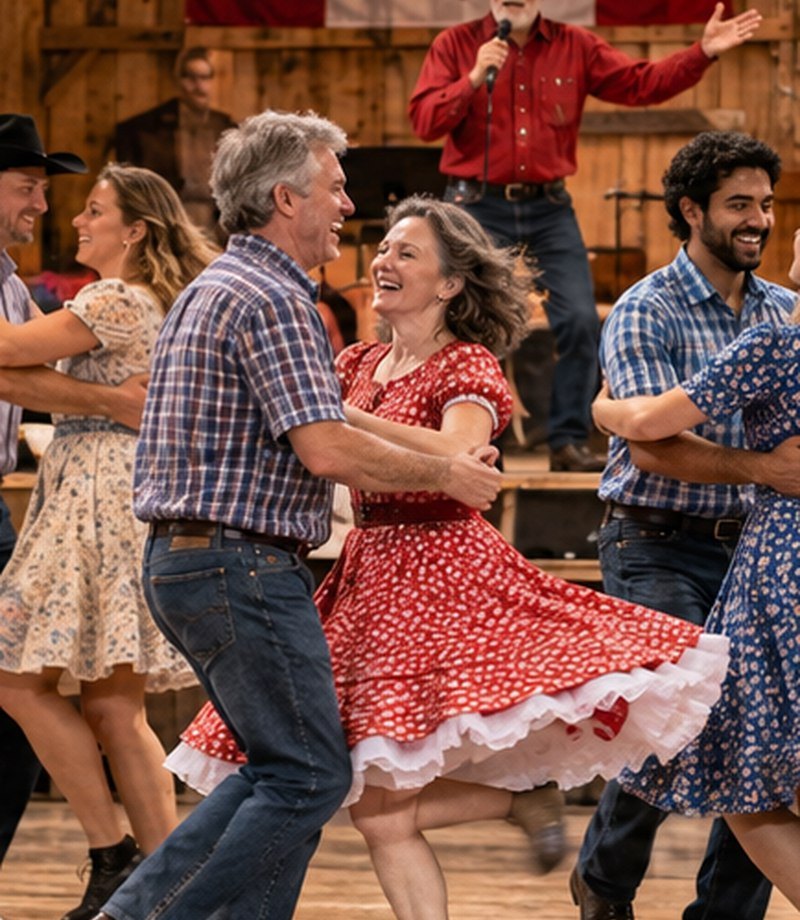
In a square dance, four couples face each other in a square while a caller — or the music itself — guides them through figures: swings, promenades, ‘ladies’ chain’ and more. In Canada the tradition takes many regional forms: Cape Breton square sets with step dancing, Métis square dances and reels on the Prairies, Québec’s called sets and the old-time dances of rural community halls.
Square sets descend from French quadrilles and British country dances that came with settlers in the 19th century. In Cape Breton, square dances in community halls such as Glencoe Mills and West Mabou are a summer ritual, with dancers breaking into step dance during the final ‘figure’. Métis communities developed their own set dances — including the Duck Dance and the Drops of Brandy — which are still performed at Métis gatherings and festivals. From 1959 to 1969 the CBC television show Don Messer’s Jubilee brought old-time fiddle music and square dancing into living rooms across the country, with the Buchta Dancers performing every week. Modern Western square dance clubs, using standard calls, also meet in many towns, while Prairie barn dances and kitchen parties keep the older community style alive.